Top Wedding Dress Trends 2025/2026 in the Style of Milla Nova
The Landscape of Bridal Fashion in 2025/2026
In 2025 and moving into 2026, bridal is defined less by one dominant look and more by a refined spectrum of runway-driven aesthetics. Social platforms compress the distance between catwalk and appointment: brides arrive fluent in silhouette language, fabric behavior, and finishing details. The most relevant wedding dress trends 2025 are therefore not vague “ideas,” but tangible design choices—how a bodice is engineered, how a skirt holds shape, how a surface catches light in motion. This shift elevates the market toward high-fashion bridal gowns that read editorial in photographs and intentional in real life.
The Shift Toward High-Couture Craftsmanship
The runway-to-aisle pipeline has tightened, and with it comes a renewed appetite for couture-level handwork. Dimensional florals, refined bead placement, and disciplined corsetry are no longer reserved for showpieces; they are increasingly expected in premium bridal. This is the new core of luxury bridal fashion: an emphasis on construction and finish that holds under close-up imagery, strong lighting, and the long choreography of a wedding day.
Bridal Individuality as the New Standard
What defines 2026 bridal trends most clearly is individuality. Brides no longer shop for a single “correct” shape; they shop for a point of view—something that signals personal taste. That can mean architectural minimalism, modern romance with controlled volume, or subtle tonal shifts that photograph more like couture than tradition. Bridal is evolving into self-authored fashion, not inherited uniform.

Milla Nova’s Signature Approach to 2025–2026 Trends
To speak about Milla Nova’s influence is to speak about drama refined by discipline. The brand’s aesthetic tends to merge sensual femininity with structured clarity—romance that feels cinematic, never sugary. Even when details are expressive, the underlying logic remains architectural: balance, silhouette authority, and textiles chosen for how they build shape and react to light. A curated reference point for this kind of fashion-coded identity can be seen through the lens of the Signature Dresses collection, where the emphasis sits on presence, structure, and elevated finish.
Dramatic Corsetry & Sculpted Silhouettes
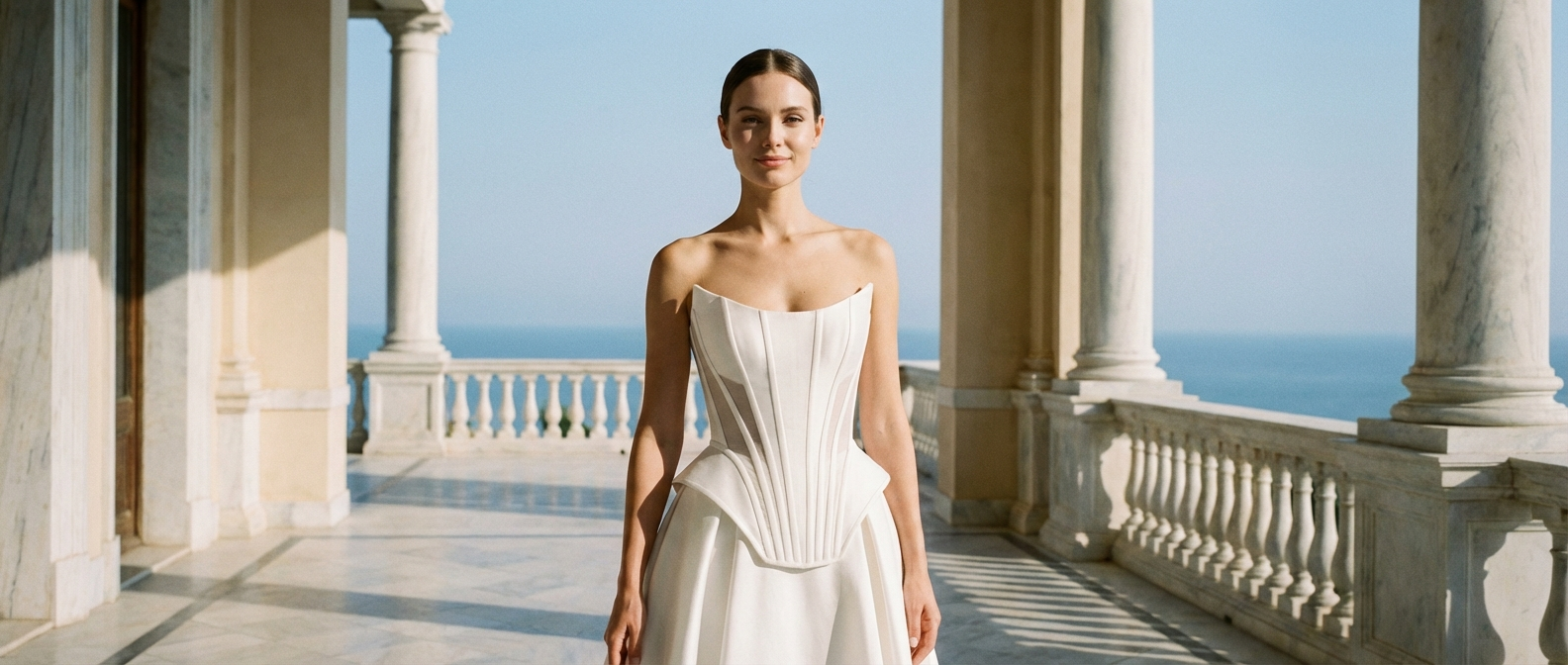
Corsetry is returning not as nostalgia, but as a modern tool of sculpting. The new corset is less about being “seen” and more about shaping posture, refining the waistline, and creating a clean bodice line that doesn’t shift through the day. When done at couture standard, support becomes invisible, and the silhouette reads effortless—precisely because it is engineered.
Modern Romance with Structured Volume
Volume is back, yet it is edited. Instead of fairytale excess, designers pursue measured drama: skirts that open with intention, bodices that stay sharp, fabrics that hold memory. The tension between softness and structure is what makes modern romance feel current—an emotional mood delivered with technical control.
Key Trend Directions for 2025/2026 Brides
Across the strongest runway bridal trends, the common denominator is construction-led design. Whether minimal or ornate, today’s premium gowns announce quality through line discipline, textile choice, and the way details are integrated rather than applied.
Architectural Minimalism
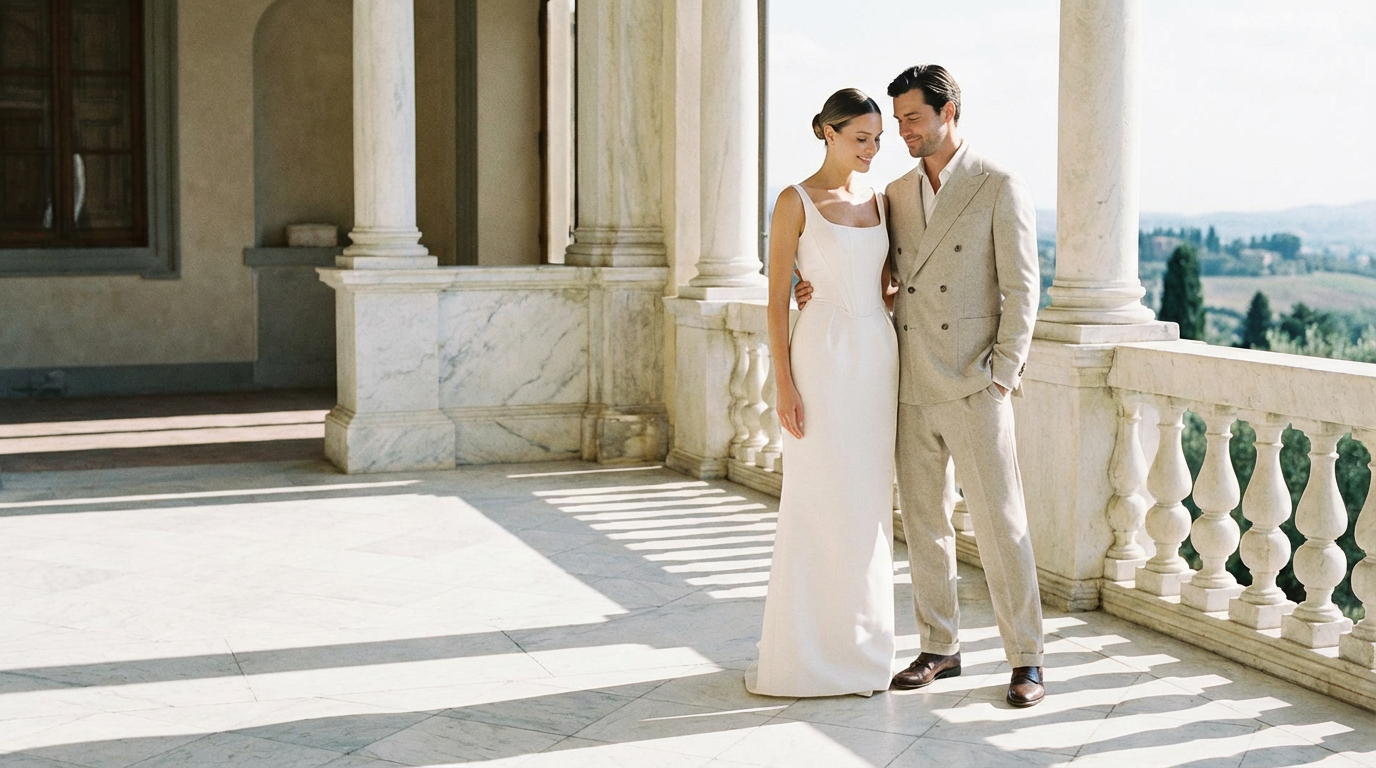
Minimalism now signals strength. Mikado, crepe, and double satin allow clean silhouettes to look decisive, not plain—especially when seams are placed like geometry and volume is restrained rather than removed. This is where “minimal” becomes couture: the luxury is in the cut, the finish, the exactness.
3D Florals & Couture Blossoms
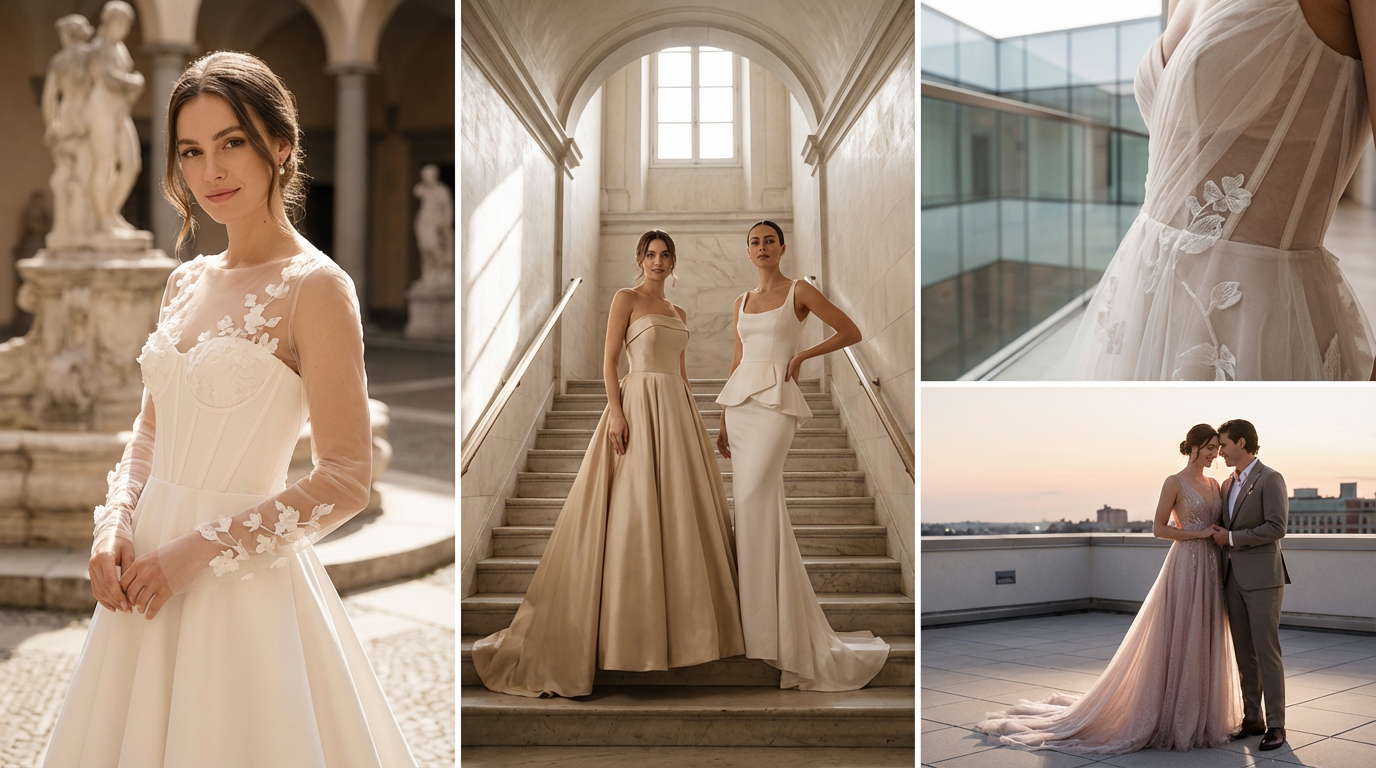
“Garden couture” remains dominant, but it’s increasingly sculptural. Florals create relief and shadow; placement is mapped to contour the body rather than blanket it. The goal is not sweetness, but artistry—texture that photographs dimensional and feels deliberately composed.
Sparkling Liquid Textures
The season’s shine is refined, not loud. Liquid satin and nuanced shimmer behave like light on water, especially under evening illumination. Instead of uniform glitter, designers favor surfaces that move—radiance that appears and disappears with motion.
Sheer Layers and Illusion Fabrics
Illusion is evolving into architecture. Sheer layering now functions as structure: invisible corsetry, tulle frameworks, and transparency used to sharpen silhouette lines rather than simply reveal skin. It’s technical, modern, and exceptionally photogenic.
Elevated Classics: Reinvented Ball Gowns
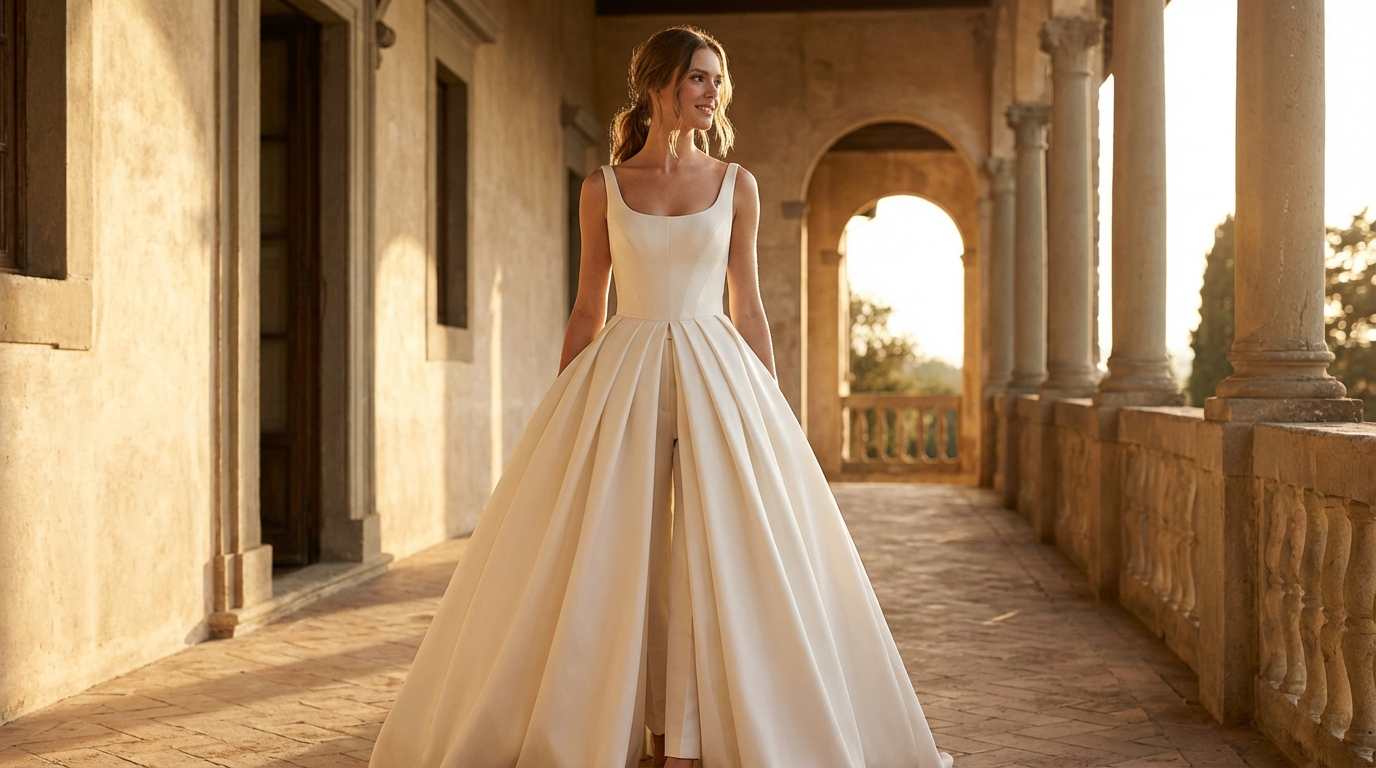
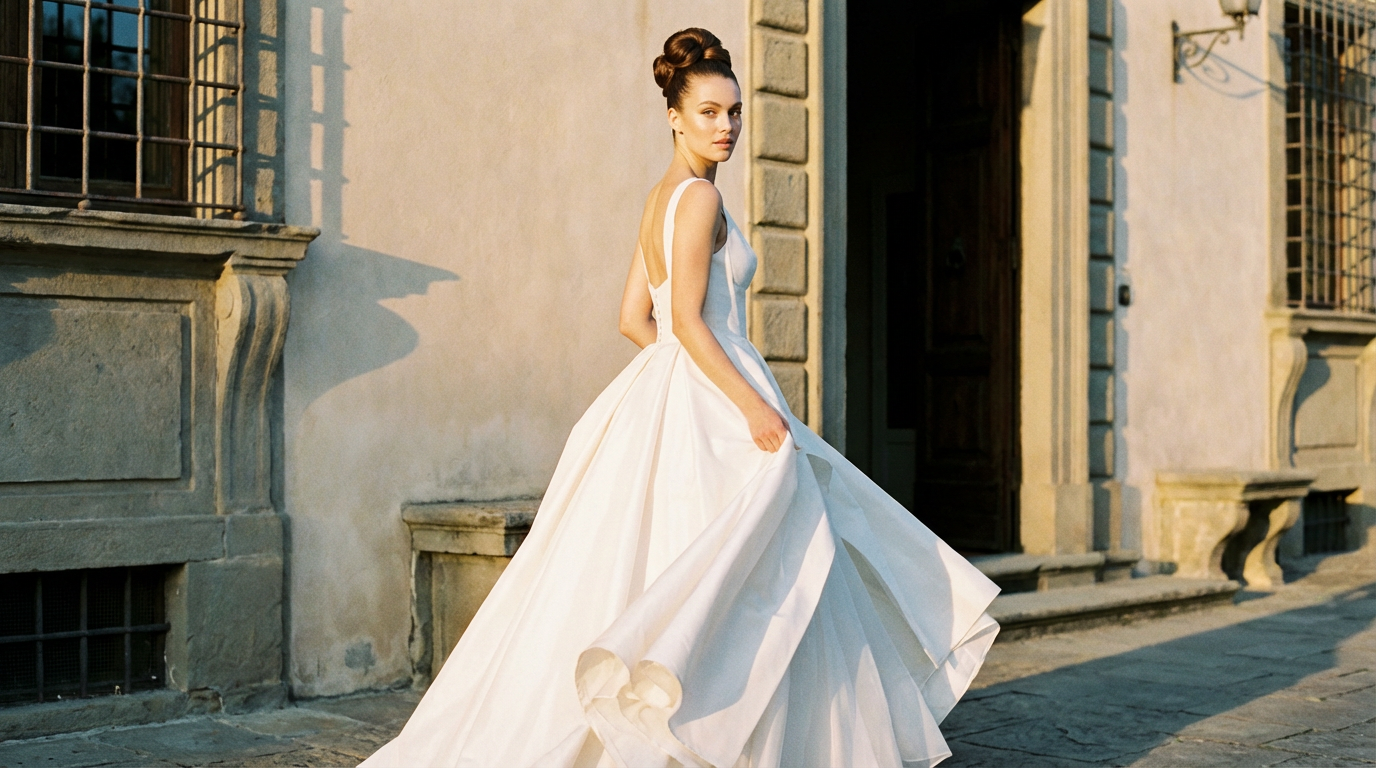
Classic silhouettes remain, but they’re being re-coded through modern proportion and material intelligence. Ball gowns feel cleaner, more graphic, more runway-aware—often anchored by corsetry and elevated textiles. A gown like Arianna captures that contemporary classicism: formal presence, couture structure, and a silhouette designed to read powerfully from every angle.

Trending Colors & Shade Forecast for 2025/2026
Color is no longer a footnote. It’s part of the design strategy—shifting how a gown photographs, how fabric looks under light, and how “luxury” registers visually.
The Reign of Soft Ivory
Soft ivory continues to replace optic white as the baseline of modern luxury. It softens contrast against skin, reads richer on camera, and makes minimal silhouettes look more dimensional.
Champagne, Nude & Diffused Gold
Champagne and nude tones thrive under indoor lighting, where they glow rather than glare. Diffused gold undertones feel especially European—mature, fashion-led, and quietly expensive.
Experimental Couture Shades
Silvered tones, airy blues, and smoky blush variations appear most naturally in fashion-forward ceremonies and editorial contexts, especially when paired with clean construction.
Why Brides Gravitate Toward These Trends
These trends reflect how weddings are experienced now: visually, socially, and emotionally. Gowns must perform in motion, in video, in high-resolution close-ups—so structure, transformation, and textile behavior matter more than ever.
Social Media Influence
TikTok and Instagram don’t merely spread aesthetics; they reward designs that translate instantly—silhouettes that read from a distance, surfaces that react to light, details that stay sharp in motion.
Desire for Personal Expression
Bridal is increasingly treated as a fashion statement—not for shock value, but for authorship. Brides want a gown that looks like a signature, not a default.
Shift Toward Couture-Level Quality
As visual standards rise, so do quality expectations. Brides notice lining, weight, seam discipline, and how a bodice holds after hours of wear. Demand is moving toward couture logic.
Expert Recommendations for Brides
How to Choose a Trend That Reflects Your Personality
Start with the mood you want to embody—clean authority, modern romance, or luminous glamour—and choose trends that serve that identity rather than compete with it. The most elevated look is always the one that feels inevitable on you.
What to Consider About Body Shape
Balance is everything. Corsetry can refine proportion; volume can define the waist; sheer layers can add dimension without heaviness. Prioritize movement and comfort, because true luxury reads as ease.
Fabric Choice and Venue Type
Fabric should match setting and season: structured textiles for architectural venues, airy layers for natural light, liquid shine for evening interiors. Even location can inform the edit—urban glamour reads differently than coastal romance. A city context like Las Vegas naturally supports bolder silhouettes and light-reactive textures that perform under night lighting and modern interiors.
Conclusion
The defining direction of 2025/2026 bridal is a higher standard—construction, textile intelligence, and self-expression refined into silhouette. In the style associated with Milla Nova, that future reads as disciplined drama: corsetry with a couture spine, volume engineered for modernity, and surfaces designed to live beautifully in motion. To experience this runway-minded sensibility through a curated boutique lens, Viero Bridal Miami reflects how high-fashion aesthetics are translated into real fittings—where trend becomes personal, and editorial becomes wearable.