Detachable Elements in Wedding Dresses: The 2-in-1 Trend
The Rise of the 2-in-1 Bridal Trend
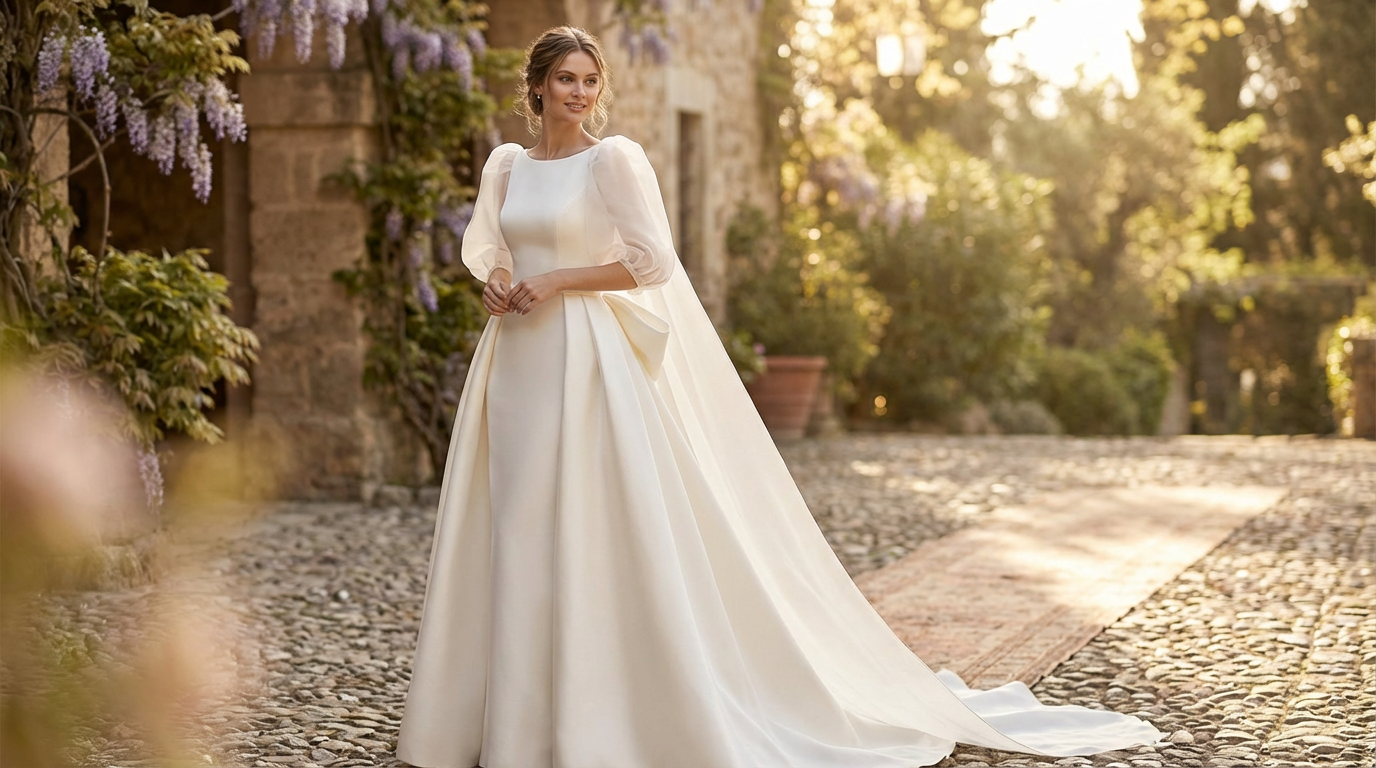
The modern bride is no longer choosing between practicality and fantasy—she’s insisting on both, in one impeccably engineered story. The 2-in-1 wedding dress has become one of the most defining signals of modern bridal fashion, not because it’s a gimmick, but because it answers a new emotional rhythm: ceremony as spectacle, reception as freedom. A truly successful detachable wedding dress feels seamless in its transformation, as if the gown always contained multiple identities—revealed only when the moment calls for it.
The Demand for Versatility in Modern Bridal Fashion
Social media didn’t invent the trend, but it sharpened its language. TikTok and Instagram turned the “reveal” into a contemporary ritual, where a silhouette shift becomes part of the day’s narrative rather than a logistical costume change. Brides want a customizable bridal look that reflects their own duality—softness and strength, tradition and modernity, drama and ease. In that context, detachable design reads as personal: the dress adapts to the bride, not the other way around.
A Luxury Alternative to Buying Two Dresses
There is also a quieter, more grown-up logic: a transformative gown can be a luxury decision that feels intelligent. Buying a second dress often splits the budget and compromises craftsmanship; a well-made convertible bridal dress concentrates value into one piece, with one fit, one fabric story, one cohesive aesthetic. When the transformation is couture-level, the result isn’t “two looks for less”—it’s one multifunctional wedding gown designed with editorial intention.

The Most Popular Types of Detachable Elements
Detachable features work best when they feel like design, not add-ons. The most compelling detachable elements wedding gown is built with a stylist’s eye and a technician’s precision: the removable piece must enhance proportion, elevate texture, and change the mood—without exposing the mechanics of the change.
Overskirts — The Most Dramatic Transformation
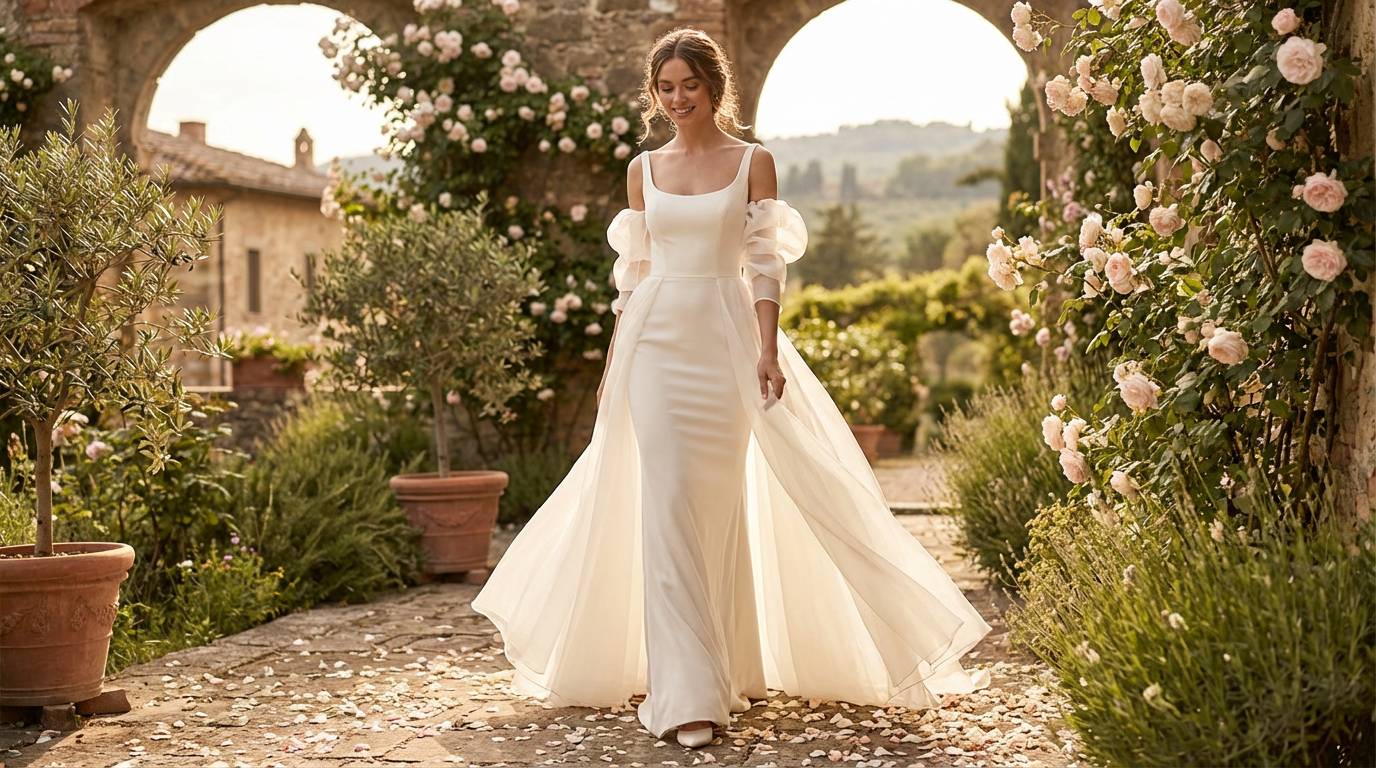
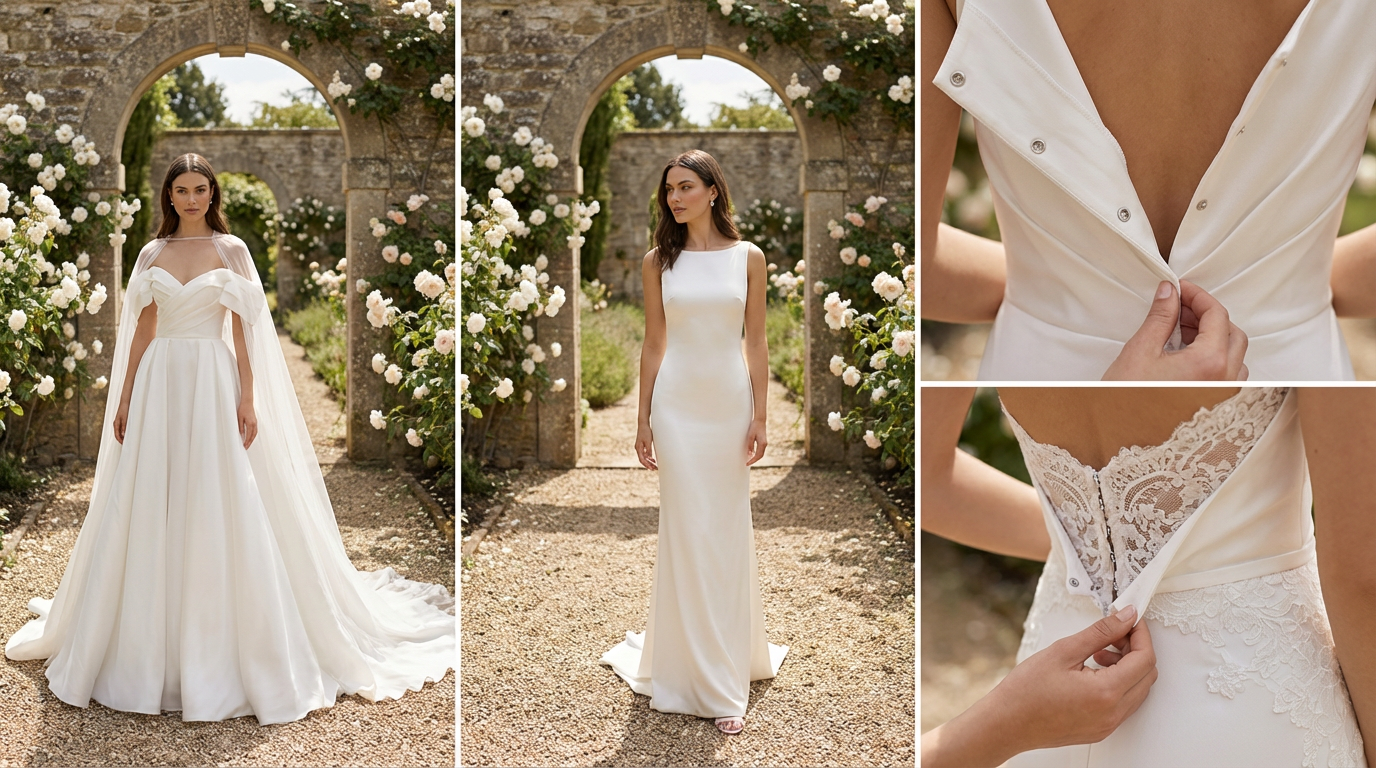
Nothing reshapes a bridal identity as instantly as an overskirt. The right overskirt wedding dress can turn a refined column into a grand entrance, introducing volume, movement, and that cinematic “aisle moment” without committing the bride to weight all night. Mikado delivers architectural fullness; organza creates airy expansion; satin offers a luminous sweep that photographs like liquid light. The power of an overskirt lies in proportion: it redraws the waistline, changes how the gown occupies space, and makes the silhouette feel ceremonial—then releases it back into sleek modernity.
Removable Sleeves — From Romantic to Couture
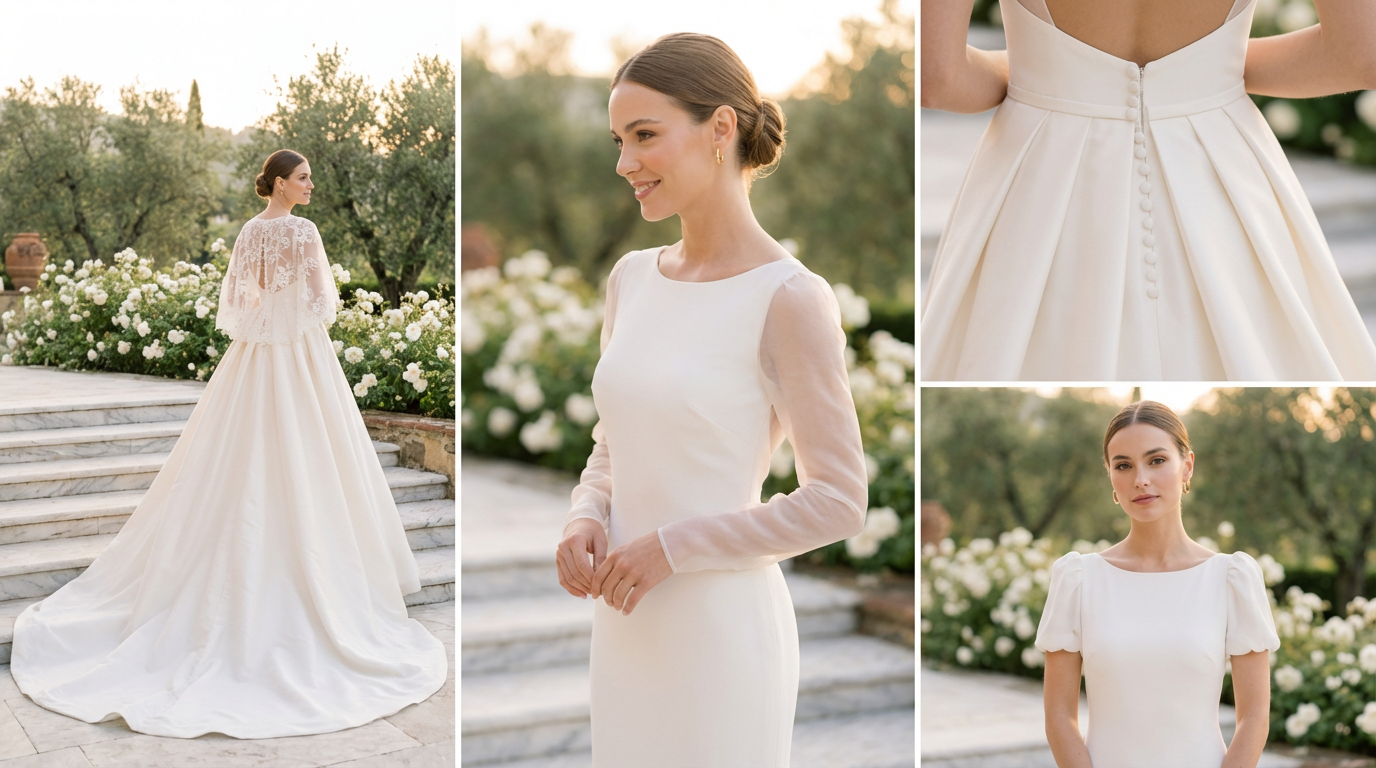
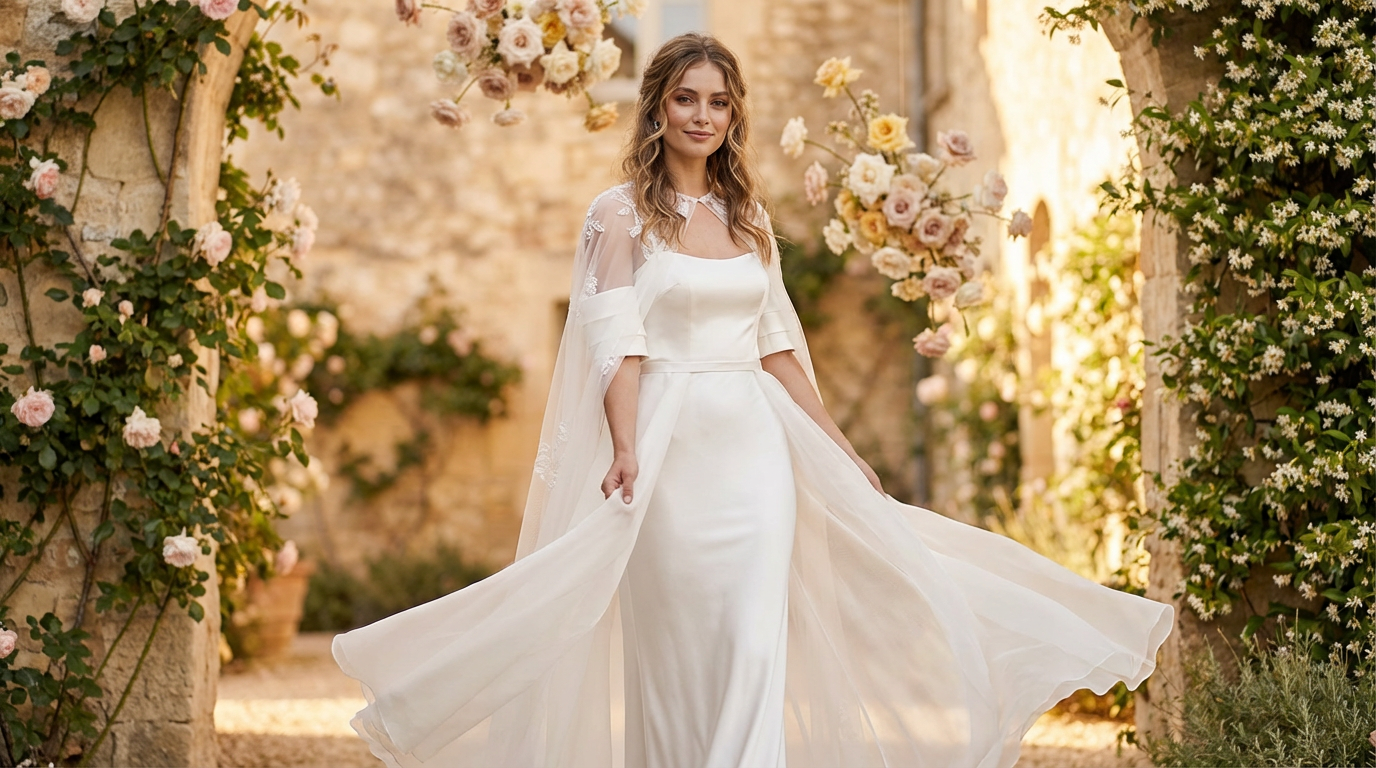
Removable sleeves have evolved from a trend into a couture language. A removable sleeves bridal dress can shift from ethereal to sharply modern depending on shape: slim sleeves that refine the line, puffed volume that brings fashion drama, or sculpted off-shoulder forms that frame the collarbone like jewelry. Their appeal is also psychological—sleeves can offer a sense of coverage for the ceremony, then disappear for dancing, portraits, and movement. When executed well, they feel like a styling decision built into the garment.
Detachable Trains — Ceremony Drama, Reception Comfort
The detachable train is a masterclass in bridal pacing. For the ceremony, it creates a sense of grandeur—length, sweep, and that trailing finish that turns walking into choreography. For the reception, it offers relief without loss: remove the train and the gown becomes lighter, more mobile, more intimate. The best detachable trains are designed to look intentional in both versions, so the dress never feels incomplete—only transformed.
Bridal Capes — The Modern Royal Touch
A bridal cape has become the new symbol of modern authority. It delivers presence without relying on traditional veiling, and it frames the bride with a kind of architectural softness—dramatic, editorial, almost regal. Capes can fall cleanly like a minimal statement or carry subtle texture for depth; either way, they change the posture of the look, making the bride feel styled rather than simply dressed. In an era of clean silhouettes, a cape is often the most contemporary way to add ceremony.
The Technical Side of 2-in-1 Dresses
Transformative design is where fashion becomes engineering. The more minimal and refined the gown, the higher the technical demand—because any visible fastening, bulk, or imbalance immediately breaks the illusion of effortless luxury.
Invisible Attachment Systems
The most important word in detachable construction is invisible. Hooks, snaps, micro-zippers, and interior loops must be placed so the eye never catches them—especially in close photography. The goal is a clean exterior line in both versions, with no puckering, no distortion, no “tell” that something has been removed. In high-end ateliers, attachment points are treated like couture secrets: present, precise, and never announced.
Construction & Weight Distribution
Weight is not merely comfort—it’s silhouette integrity. A detachable piece must be balanced so it doesn’t pull the bodice, shift the waist, or change the way the dress sits after hours of wear. The strongest versatile wedding dress designs distribute volume through structure: internal support, correct anchoring, and patternmaking that anticipates movement. A transformation should feel like a change of mood, not a change in fit.
Fabric Compatibility
Fabric pairing is where many convertible concepts either succeed brilliantly or fail quietly. Some textiles fight each other: a heavy, crisp overskirt can overwhelm a fluid base; a glossy top layer can clash with a matte underdress. Compatibility is about texture, weight, and light behavior—how materials photograph together, how they move in the same rhythm, how they maintain a unified “finish.” When chosen thoughtfully, fabric contrast becomes intentional design rather than accidental mismatch.
Why Brides Love Transformative Dresses
Beyond practicality, there’s emotion: the sense that the bride’s look can evolve with the day, reflecting different moments of self and celebration without losing aesthetic cohesion.
Ceremony vs. Reception Look
The ceremony often asks for symbolism—grandeur, structure, a silhouette that feels formal enough to hold the weight of the moment. The reception asks for intimacy and movement. A well-made convertible concept allows both: dramatic entrance first, effortless celebration later, without changing the dress’s identity.
The Emotional Impact of the Reveal Moment
The reveal has become modern bridal theatre—an intentional, fashion-forward moment that guests remember and cameras amplify. It’s not only about surprise; it’s about narrative. The bride shows another version of herself—lighter, freer, more playful—and the room reacts. That emotional punctuation is part of why the trend continues to grow.
Practical Advantages
The practical benefits are real, but in premium bridal they must feel elegant. Less time changing, one cohesive fit, easier movement, fewer compromises. The best designs make comfort feel like couture logic, not convenience.

Tips for Choosing the Perfect 2-in-1 Wedding Dress
Choosing transformative design should feel like curating a wardrobe of moments—ceremony, portraits, dinner, dancing—without breaking the editorial line of the day.
Consider Your Venue
Space changes how detachable drama reads. A grand interior rewards volume and length; an outdoor setting may call for lighter layers that move beautifully in wind and light. If you’re shopping with location in mind, browsing a destination like Ardmore, Pennsylvania can help you visualize how boutiques curate convertible styles for real venues and real timelines.
Choose the Right Silhouette for Your Body Type
The most flattering transformations are those that respect proportion. Overskirts should enhance the waist rather than swallow it; sleeves should frame the shoulders rather than widen them; trains should elongate rather than drag. A convertible concept works best when the “after” look feels as intentional as the “before,” with neither version looking like a compromise.
Accessories That Work with Convertible Dresses
Accessories must be chosen with both looks in mind. If you’re adding volume and drama for the ceremony, keep jewelry architectural and refined so the silhouette stays the hero. If you’re removing elements later, consider a second styling note—an earring change, a sharper lip, a sleeker hair finish—so the transformation reads complete rather than simply reduced.
Possible Drawbacks (That Brides Should Know)
A premium editorial conversation about the trend should also be honest: transformation is beautiful, but it’s not effortless unless it’s engineered to be.
The Weight of Overskirts
The most dramatic overskirts can be heavy, especially in dense satin or structured mikado. If weight becomes fatigue, the “dream” look can feel like work. The solution is not always removing volume—but choosing smarter construction and lighter materials that still hold shape.
Movement Restrictions
Some detachable elements restrict motion, especially sleeves with rigid structure or trains anchored too firmly. The fitting should include walking, sitting, and dancing tests—not as basic advice, but as a couture reality check: the garment must perform as beautifully as it photographs.
Attachment Visibility
If attachment systems are poorly placed, they can show in close shots—tiny bumps, seam distortion, or visible fastening shadows. In minimal gowns, this is especially unforgiving. The cleanest result depends on craftsmanship and on choosing a design where the detachable feature was planned from the first pattern draft.
Conclusion
The 2-in-1 movement is not a fleeting novelty—it’s a modern expression of bridal identity. The best transformative gowns treat versatility as couture: engineered attachment, thoughtful fabric pairing, and a silhouette that remains refined in every version. A collection like Viero Winter 2023 reflects how fashion-led bridal evolves toward modular elegance, while a gown such as Aurora captures the idea that transformation can feel editorial rather than practical. And when you want that concept curated with taste and technical understanding, a boutique like Blanc de Blanc Bridal becomes more than a place to shop—it becomes the space where a convertible vision is refined into a look that feels entirely, unmistakably yours.