How to Care for Your Wedding Dress After the Wedding: Storage and Cleaning
Why Wedding Dress Care Matters Beyond the Big Day
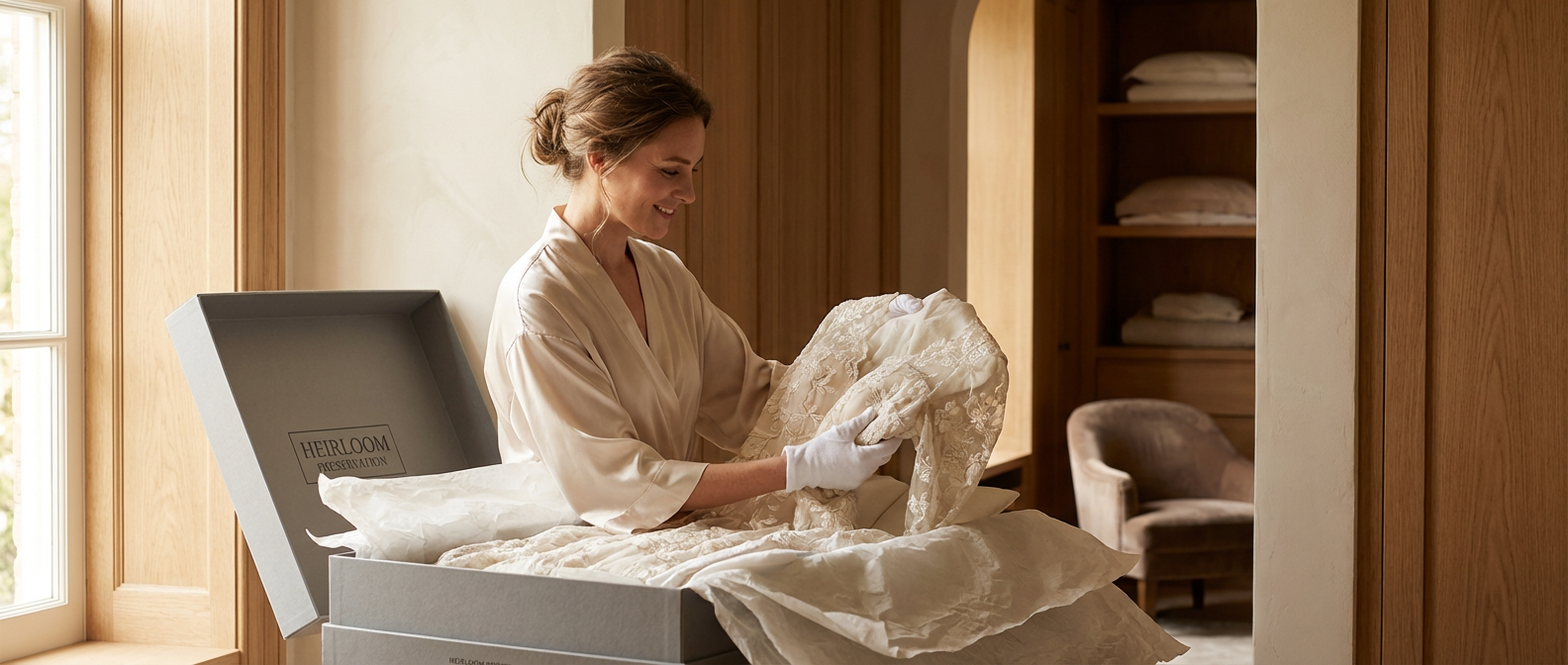
A wedding dress is one of the rare garments that carries both couture-level material value and personal mythology at once. Thoughtful wedding dress care is not simply about keeping a gown “pretty”; it is about protecting a textile object that was engineered to be worn for a single day, then remembered for decades. Many designer dresses are built from fragile weaves, complex internal structures, and hand-applied embellishments that react to time in very specific ways. Caring for the dress after the wedding is, in essence, an act of stewardship—of craft, of memory, and often of the hope that the gown might one day become an heirloom.
The Emotional and Material Value of Preservation
Preservation lives in two registers. Emotionally, a gown holds the intimacy of the day—its movement, its photographs, its atmosphere—making the desire to preserve wedding gown feel almost instinctive. Materially, a bridal dress is a high-maintenance object: silk can watermark, satin can lose its polish, beading can dull, and lace can become brittle if stored incorrectly. When preservation is done with intention, it protects both the visible beauty and the quiet story embedded in the fibers.
Understanding the Fragility of Bridal Fabrics
Bridal textiles are sensitive because they are chosen for aesthetics, not durability. Silk and satin can discolor with light exposure and respond unpredictably to moisture. Tulle and chiffon crease and snag easily. Lace has structural delicacy—beautiful, but vulnerable to tension and abrasion. Organza can retain “memory” of folds, while embellished areas introduce weight that stresses seams over time. Understanding these realities is the foundation of responsible wedding dress after wedding care: the gown is not fragile because it is “weak,” but because it is refined.
The Immediate Steps: What to Do Right After the Wedding
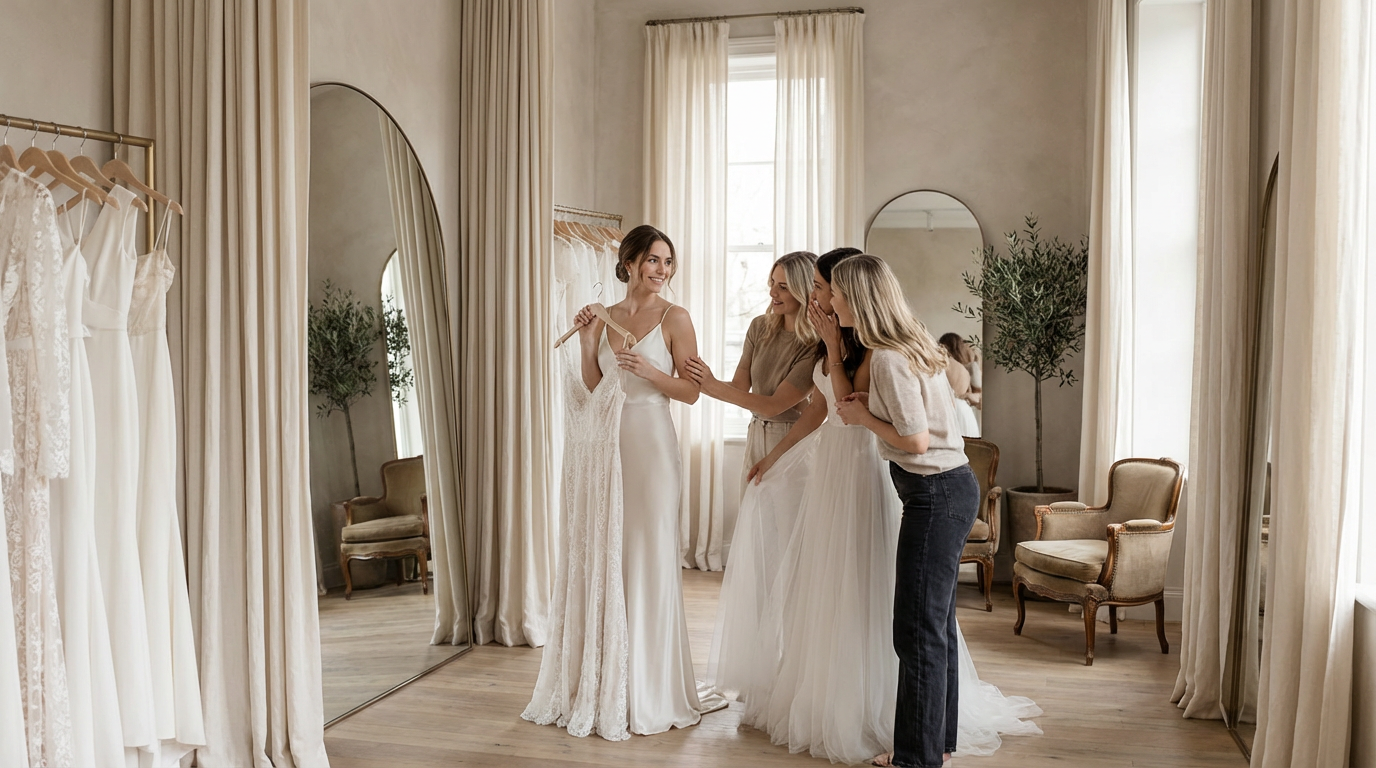
The first days matter because time changes chemistry. Even when stains are not obvious, invisible residues—sweat, fragrance, body oils, champagne mist—can oxidize and darken over weeks. The goal is not to panic-clean, but to stabilize the dress: keep it breathable, protect it from heat and sunlight, and prepare it for expert assessment before stains become permanent.
Inspecting the Dress for Damage and Stains
Inspection should be deliberate and clinical, not emotional. Hems often carry ground-in dust and grime; bodices can hold makeup transfer; underarms and neckline may have perspiration marks that appear later. Pay special attention to areas where hands touched repeatedly—waist, skirt gathers, strap lines—because friction can loosen threads and beadwork. This careful scan gives a preservation specialist the map they need to treat the gown without guessing.
Why Speed Matters in Post-Wedding Care
Organic stains are time-sensitive because they evolve. Sugars, tannins, and proteins can set into fibers and develop into yellowing that appears “mysteriously” months later. The earlier you begin professional care, the more likely the fibers can be restored without aggressive intervention. When brides ask how to clean wedding dress safely, the most accurate answer is often: not at home, and not after waiting too long.
Professional Cleaning: When and How to Choose the Right Service
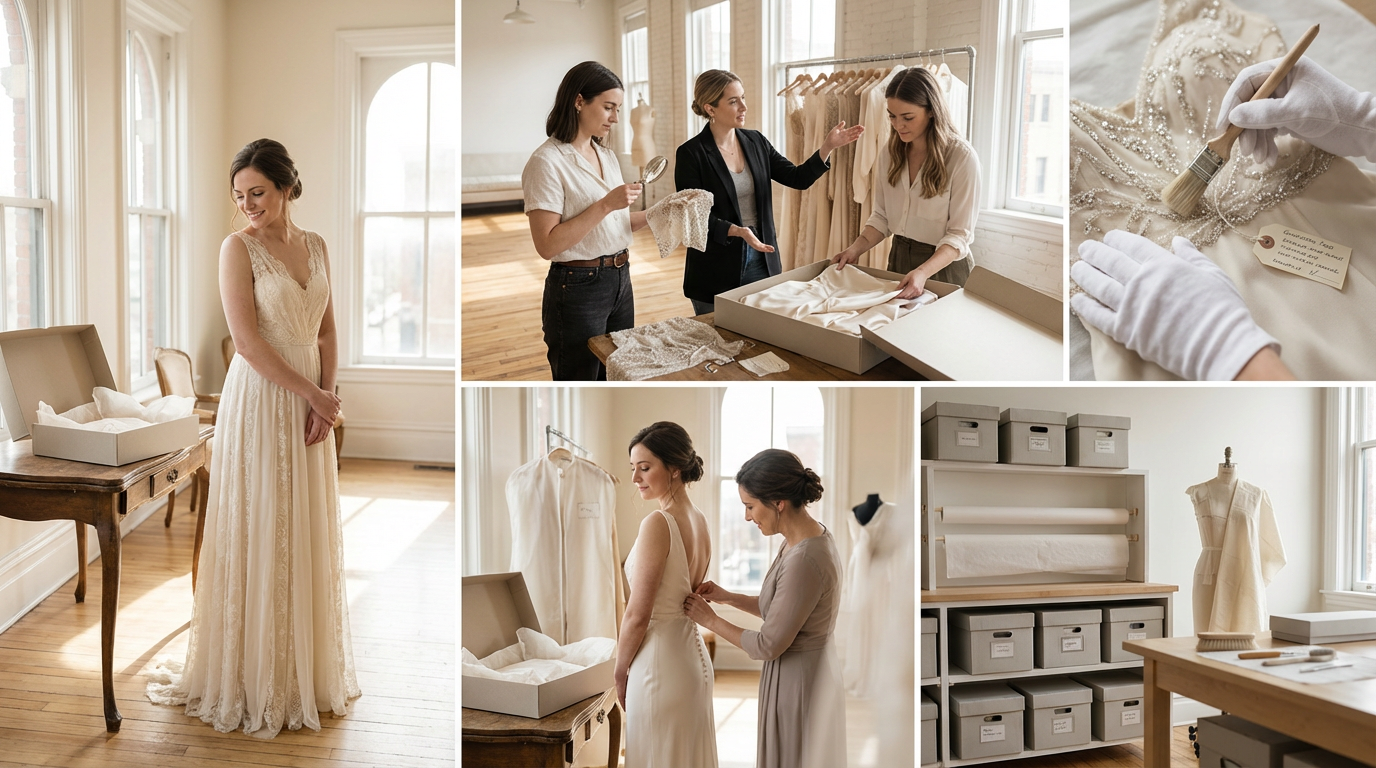
For a designer gown, professional wedding dress cleaning is not a luxury add-on—it is risk management. Standard dry cleaners may be excellent for everyday garments, yet bridal construction introduces variables they may not routinely handle: internal corsetry, mixed-media layering, or embellishment that requires protection during treatment. A bridal specialist approaches the dress like a textile conservator with a fashion eye.
What Makes a Bridal Cleaning Specialist Different
A true specialist evaluates fabric composition, tests solvents or methods discreetly, and treats embellished zones by hand when necessary. They understand that lace and tulle often respond best to localized work rather than full immersion, and that certain trims can react to chemicals even if the base fabric does not. Their work is less “process” and more diagnosis—choosing the gentlest path that still achieves restoration.
Questions to Ask Before Entrusting Your Dress
The most meaningful questions aren’t about price; they’re about methodology and accountability. Ask what cleaning approach they recommend for your specific fabric mix, how they protect beadwork and appliqués, and whether they have experience with couture construction. Clarify what happens if a stain does not lift fully, and how the gown will be packaged after treatment. This isn’t distrust—it’s the appropriate language of bridal gown preservation.
Understanding Different Cleaning Methods for Different Fabrics
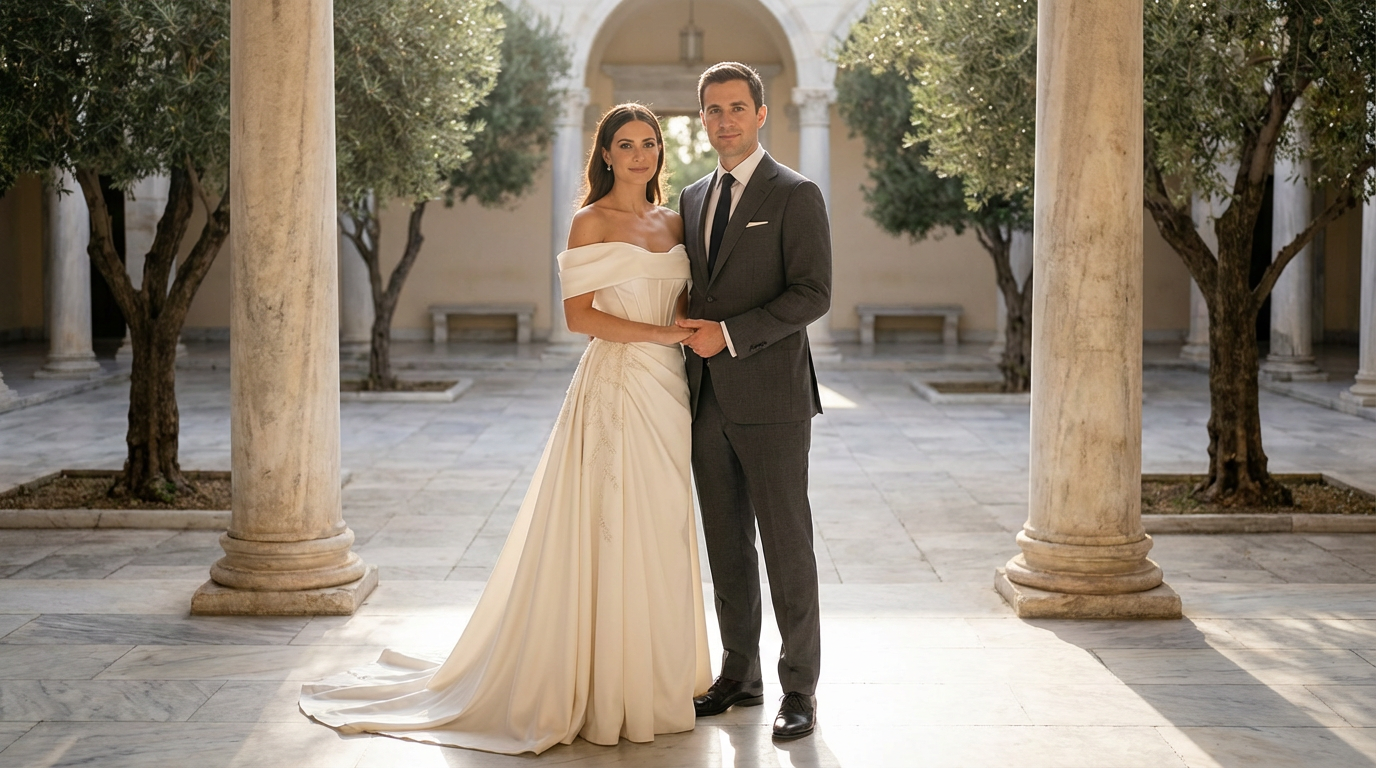
There is no single universal cleaning method because bridal fabrics behave differently under stress, moisture, and solvent exposure. The goal is always the same—lift residues while maintaining hand-feel, sheen, and structure—but the route depends on fiber content, weave, and decoration density.
Silk, Satin, and Delicate Weaves
Silk and satin can be particularly unforgiving: water can spot, friction can change sheen, and heat can distort. Controlled professional methods are preferred because they manage temperature and agitation and can preserve the fabric’s surface integrity. If your gown is similar in finish and refinement to styles shown in the S/S 2022 collection, that same polished surface is exactly what preservation aims to protect.
Lace, Tulle, and Embroidered Details
Lace and tulle demand gentleness because they are structurally open, easily snagged, and often paired with embroidery. Beading and appliqués introduce weight and stiffness, which means the textile can crease differently around decorated zones. Specialists often treat these areas with careful, localized techniques—preserving both the integrity of the mesh and the dimensional finish of the embellishment.
The Art of Long-Term Storage: Protecting Your Dress for Years
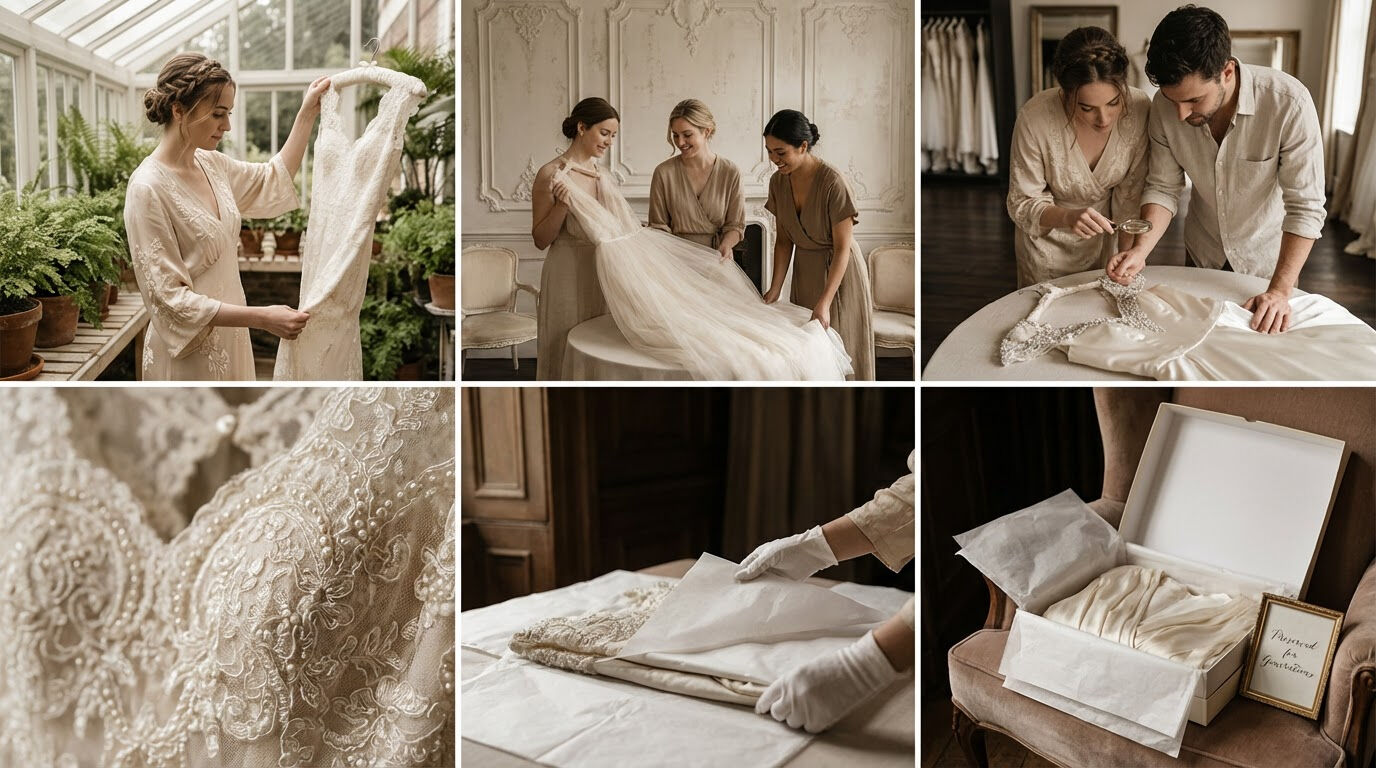
Wedding dress storage is where good intentions often fail. The gown may look clean, yet improper storage can cause yellowing, mildew, or irreversible creasing. Long-term storage is not about hiding the dress away; it is about creating a stable environment where fibers can rest without stress.
Choosing the Right Storage Box and Materials
Museum-standard storage begins with breathable, acid-free materials. Acid-free tissue cushions folds so they don’t become hard creases, and archival boxes prevent chemical breakdown that can occur with standard cardboard. Plastic is the enemy of longevity because it traps moisture and can accelerate discoloration. If you’re storing a structured gown—something with the sculptural clarity of the Ava dress—supporting its form with proper tissue placement becomes even more important over time.
Climate Control and Environmental Factors
Textiles age fastest under fluctuating temperature and humidity. A cool, dry, dark interior closet is safer than basements, attics, or garages, where seasonal shifts invite moisture and mold. Light exposure is also cumulative; even indirect sunlight can gradually warm whites into yellow. Environmental control is not fussy—it is basic heirloom preservation logic.
Avoiding Common Mistakes in Wedding Dress Care
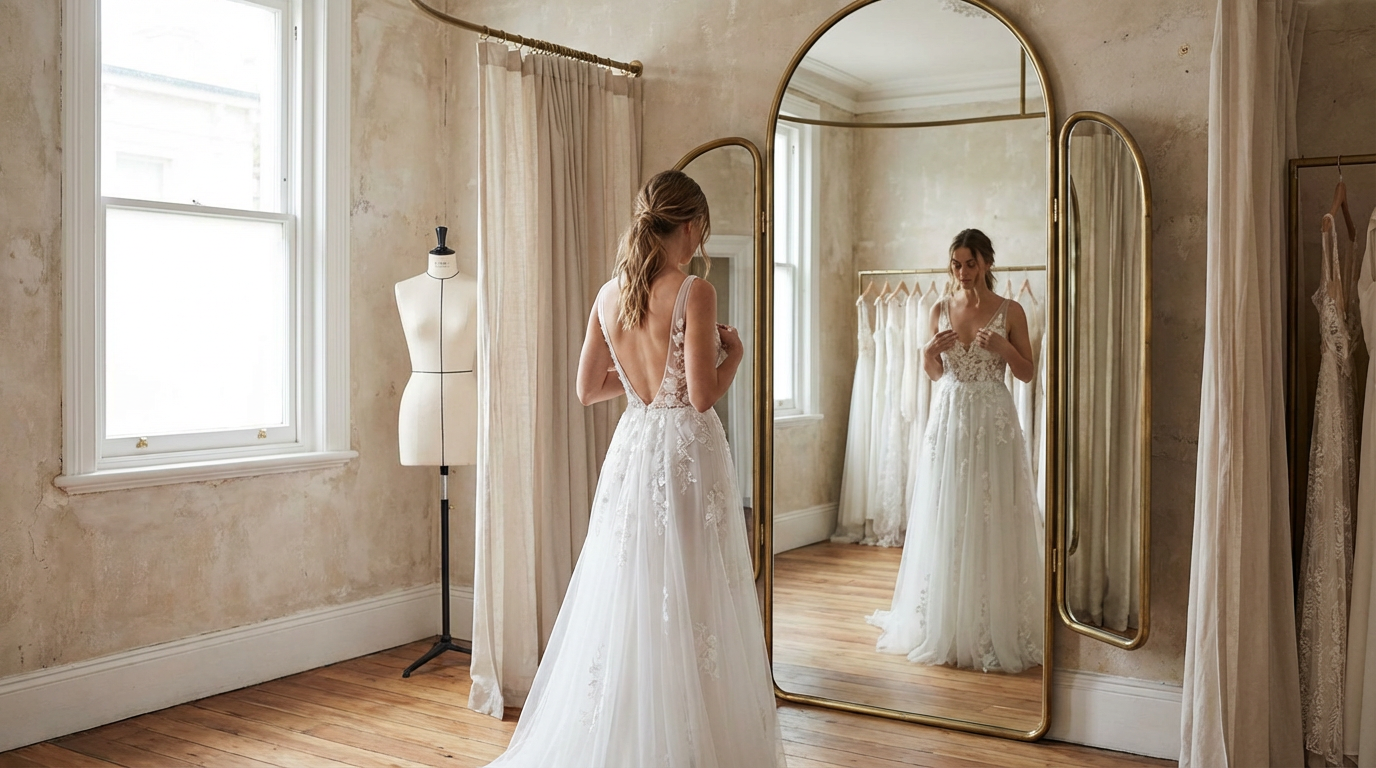
Most damage comes from everyday materials used in the wrong context: plastic garment bags, airtight containers, or well-meant stain “spotting” that spreads residue deeper into fibers. The most elegant approach is restraint—do less yourself, but do it correctly.
Why Plastic Covers Can Damage Your Dress
Plastic prevents airflow, which encourages condensation and can create a microclimate where fabric yellows or develops odor. Breathable covers, archival boxing, and controlled storage conditions protect the gown without sealing it into a chemical fog.
The Dangers of DIY Cleaning Attempts
Home cleaning can alter color, distort texture, and loosen adhesives or threadwork—especially on gowns with layered construction or embellishment. Even clear products can leave rings that appear later. When preservation is the goal, “almost invisible” damage is still damage.
Preserving Embellishments: Crystals, Beads, and 3D Details
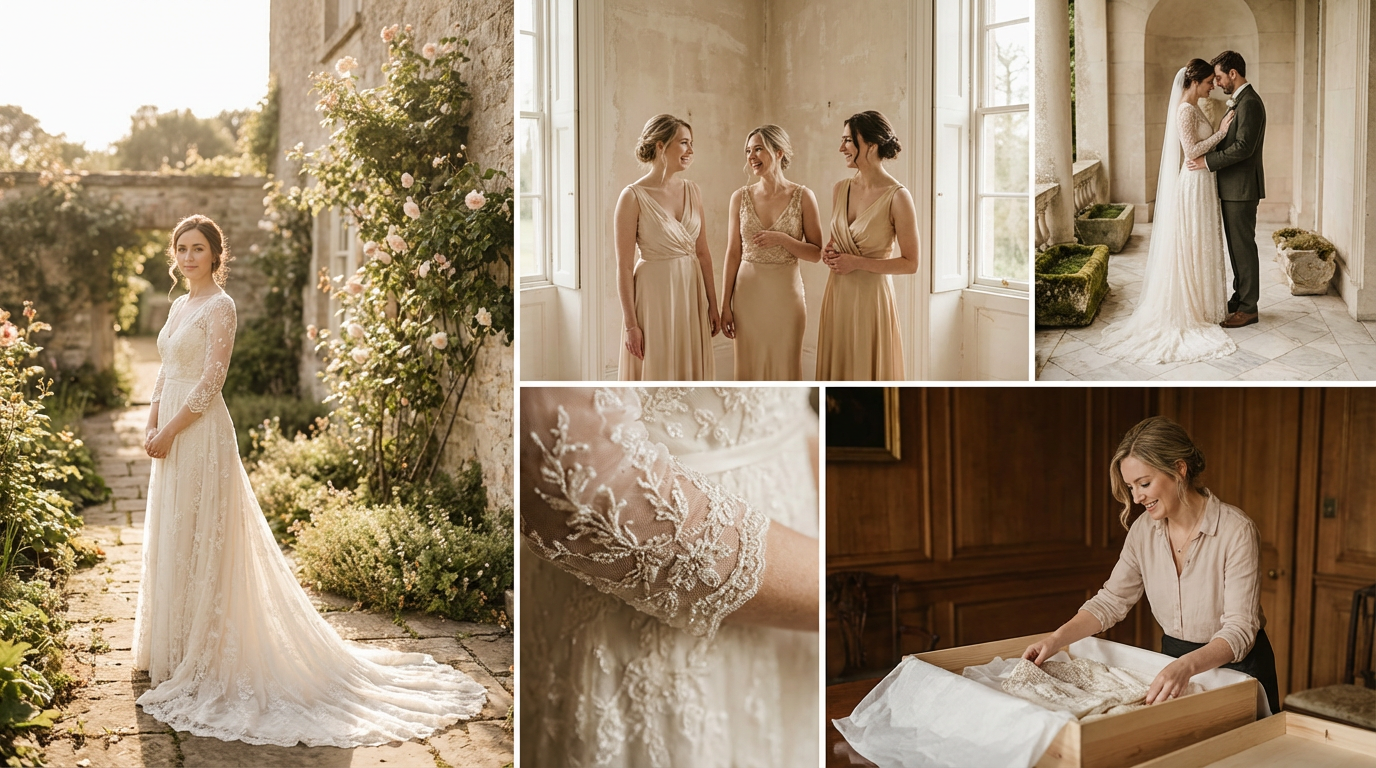
Embellishment preservation is a specialized discipline because decoration is both fragile and weight-bearing. Crystals can dull, beads can loosen, and 3D details can crush if stored under pressure. The gown’s surface requires protection that respects both aesthetics and physics.
How Professionals Handle Delicate Decorations
Specialists isolate embellished zones, reduce friction, and avoid harsh solvents that can cloud crystals or weaken threads. The aim is to maintain brilliance and attachment integrity rather than “over-clean” and risk structural loss.
Checking for Loose Elements Before Storage
Before final boxing, it is worth confirming that nothing is pulling or catching—because loose beads can snag lace, and detached pieces can scratch satin during storage. Small reinforcement now can prevent long-term abrasion and hidden damage.

When to Re-Inspect Your Stored Dress
A preserved dress should not be forgotten indefinitely. Re-inspection every few years is a sensible conservation practice: it catches early yellowing, folding pressure marks, or climate-related issues while they’re still correctable.
Signs That Your Dress Needs Professional Attention
Yellowing along folds, an unexpected odor, darkening near the hem, or texture changes are signals—not failures. They often indicate environmental stress or residues that need secondary treatment. Early intervention protects the gown’s integrity far better than late repair.
Refreshing and Re-Storing Your Gown
Re-boxing is a gentle reset: airing briefly in a clean, shaded space, replacing tissue, and adjusting fold positions to reduce permanent creases. It is the textile equivalent of turning a page—protecting the garment’s next decade.
Preparing Your Dress for Future Generations
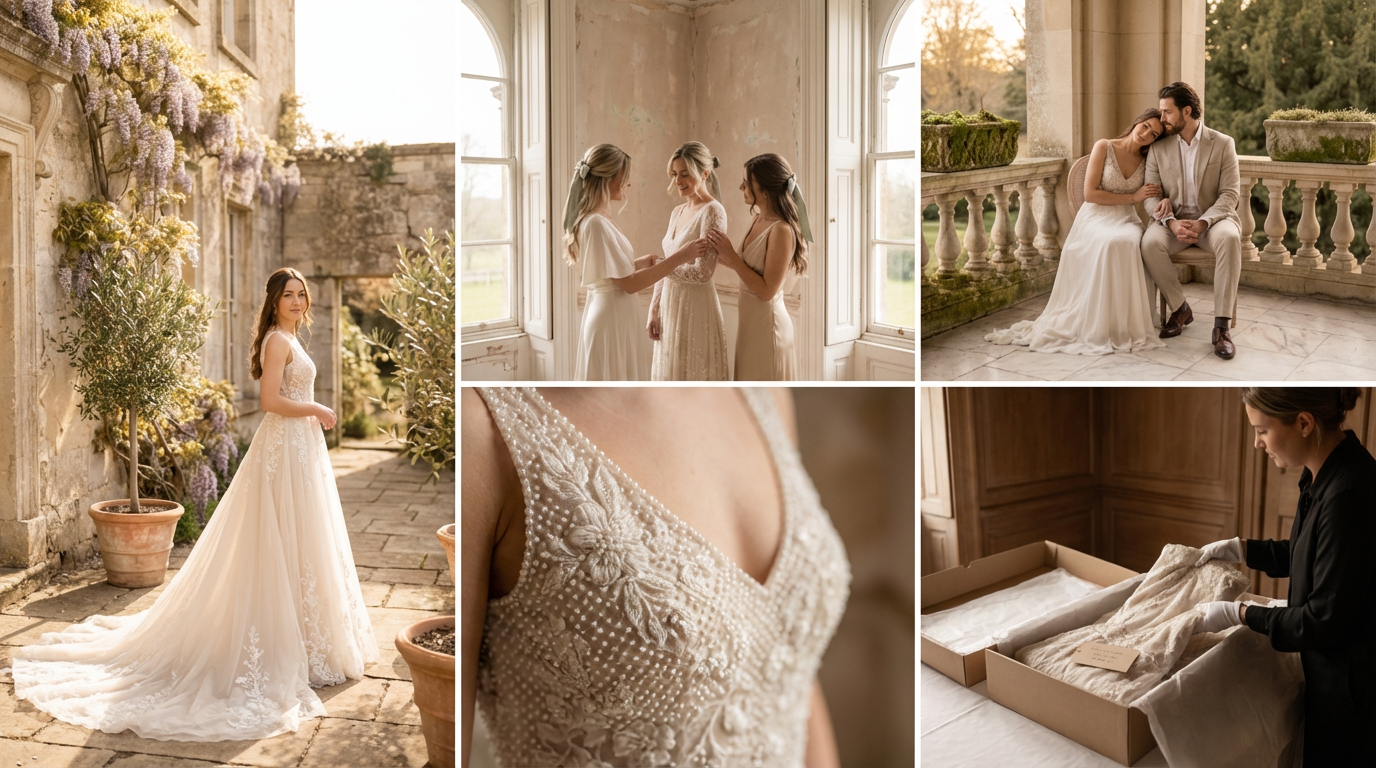
Preservation is ultimately an act of continuity. Even if the dress is never worn again in its original form, its materials can become part of future stories—lace incorporated into a veil, fabric transformed into an accessory, structure inspiring a new design. Caring for it now keeps options open later.
The Tradition of Heirloom Wedding Dresses
Heirlooms endure because they are tangible memory. A preserved gown is more than fashion; it is proof of a day that mattered, kept in a form that can be touched, studied, and understood by someone who wasn’t there.
Modernizing Vintage Gowns While Preserving Their Essence
Modern restoration respects the original while allowing adaptation. The goal is not to freeze the dress in time, but to preserve its essence—so it can be reinterpreted without being erased.
Conclusion
The most intelligent post-wedding care treats the dress as both couture and keepsake. Thoughtful wedding dress storage, specialist-level cleaning, and an archival mindset protect fabric, structure, and embellishment from the slow damage of time. And when the gown needs professional handling—whether immediately after the wedding or years later—working with an experienced salon network can be part of that preservation strategy, starting with a location such as Glendale, California and a boutique like Viero Bridal Chicago, where the conversation around gowns tends to include not only choosing them, but caring for them as future heirlooms.