Romantic Silhouettes: Lace, 3D Flowers, and Appliqués
The Essence of Romantic Bridal Silhouettes
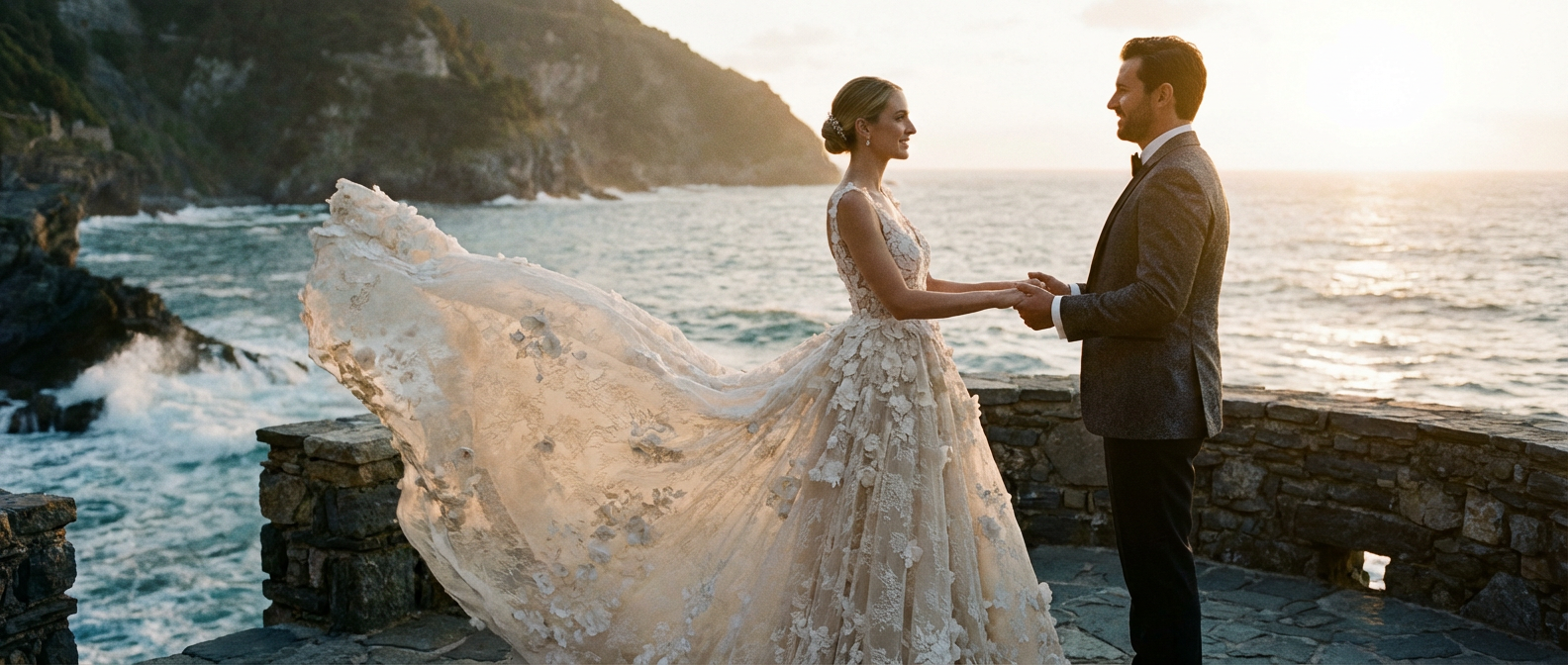
Romantic bridal silhouettes endure because they don’t rely on spectacle—they rely on sensation. A truly romantic wedding dress is felt before it is fully understood: softness that reads as intimacy, texture that suggests memory, and detail that looks hand-touched rather than manufactured. In today’s high-fashion bridal landscape, romance is not synonymous with sweetness; it is a refined language of fluidity, lightness, and artistry, where lace, dimensional florals, and sculpted embellishment turn a gown into an atmosphere.
The Timeless Appeal of Soft and Fluid Designs
Romance remains timeless because it flatters the body through gentleness rather than control. Soft bridal silhouettes—whether a floating A-line, a weightless fitted shape, or a skirt that blooms and settles—create an emotional effect that feels instinctive: ease, tenderness, natural grace. This is why the modern romantic bridal style continues to dominate editorial pages. It doesn’t try to overpower the bride; it amplifies her presence through movement, translucency, and the quiet beauty of line that never feels forced.
How Movement Defines Romantic Elegance
Movement is the signature of romance. Tulle, chiffon, and soft organza don’t simply “flow”—they breathe, catching air and releasing it like a slow exhale. That breathing quality is what makes a romantic gown feel alive: fabric becomes choreography, turning each step into a gentle shift of light and shadow. In couture-level work, even the lightest textiles are engineered to move with intention, so the silhouette remains delicate without becoming shapeless.
Lace as the Heart of Romantic Couture
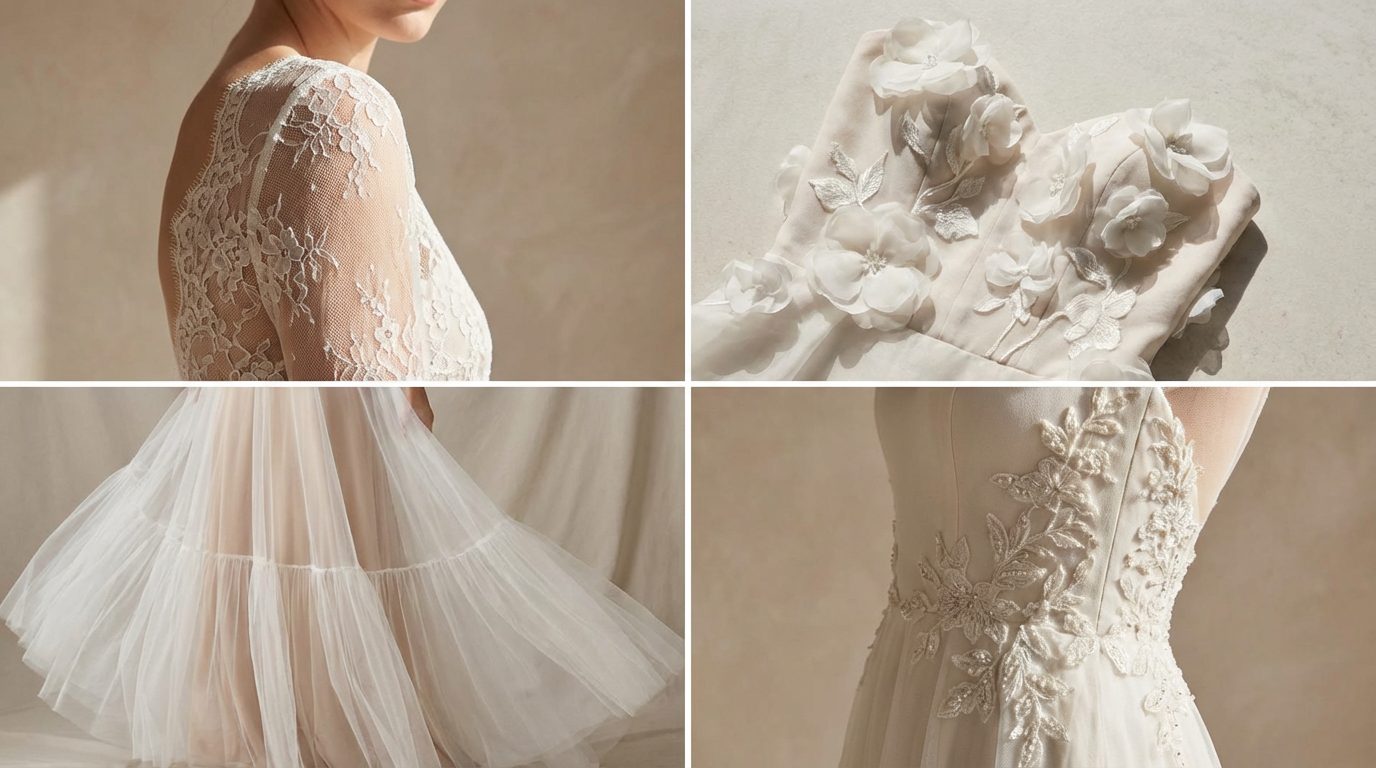
Lace is bridal’s most enduring texture because it carries both history and possibility. A lace wedding dress can feel traditional, yet it can also feel radically modern depending on scale, placement, and transparency. Lace doesn’t merely decorate the surface; it creates depth—an interplay of skin, fabric, and negative space that reads as intimacy rendered in design.
The Emotional Power of Lace in Bridal Fashion
The appeal of lace is emotional as much as aesthetic. Its translucency suggests vulnerability, while its intricacy signals devotion—time, patience, craftsmanship. Bridal lace details evoke heritage without locking a bride into the past, because lace can be styled toward softness or sharpness, innocence or edge. That versatility is why lace remains central to romantic couture: it holds the past lightly while speaking fluently to the present.
Modern Interpretations of Traditional Lace
Contemporary designers have shifted lace from “ornamental” to architectural. Oversized motifs, unexpected geometry, and strategically placed sheer panels create a modern rhythm on the body—less vintage fantasy, more fashion composition. Layering lace over tonal linings can make the pattern look like it’s suspended, while cutouts and placement techniques use lace to sculpt the figure with subtle precision. The result is romance that feels current, editorial, and intentional.
3D Floral Elements as the New Era of Romanticism
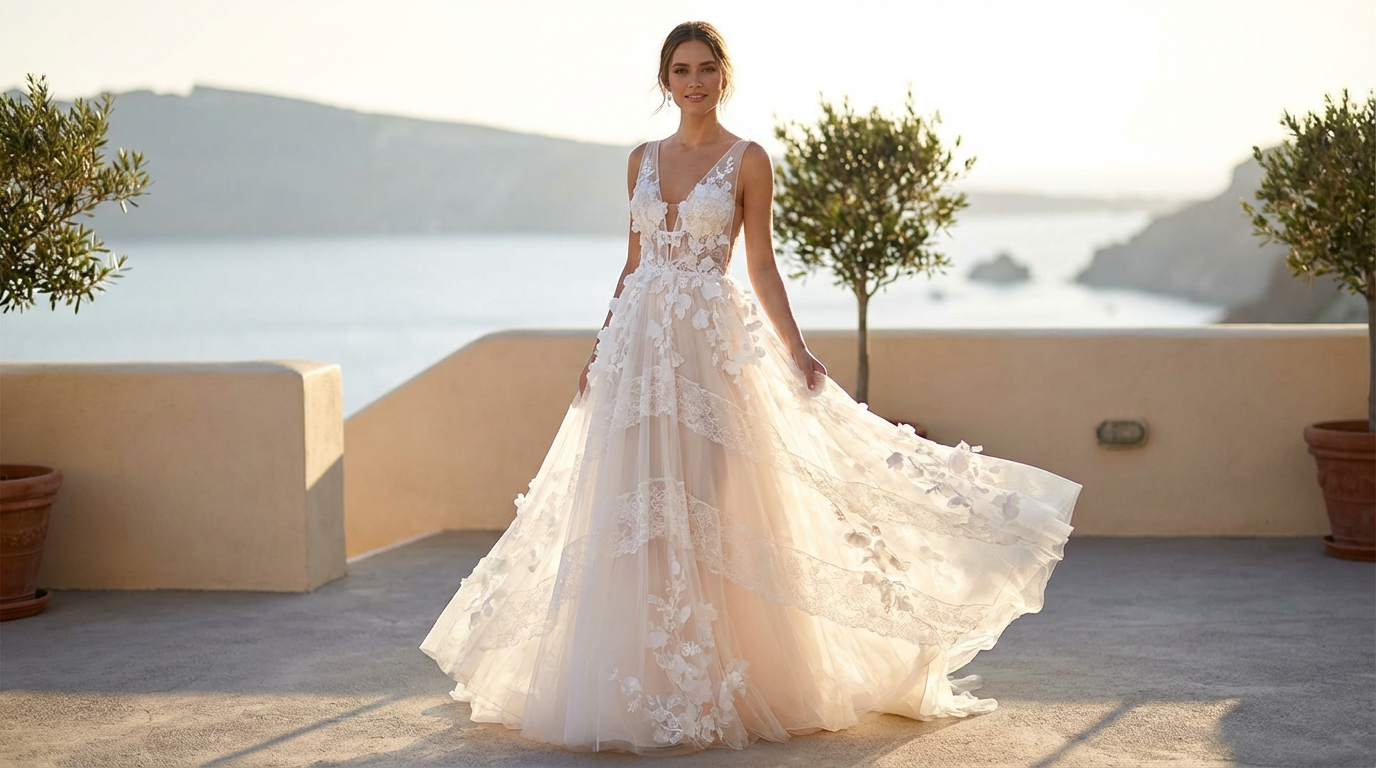
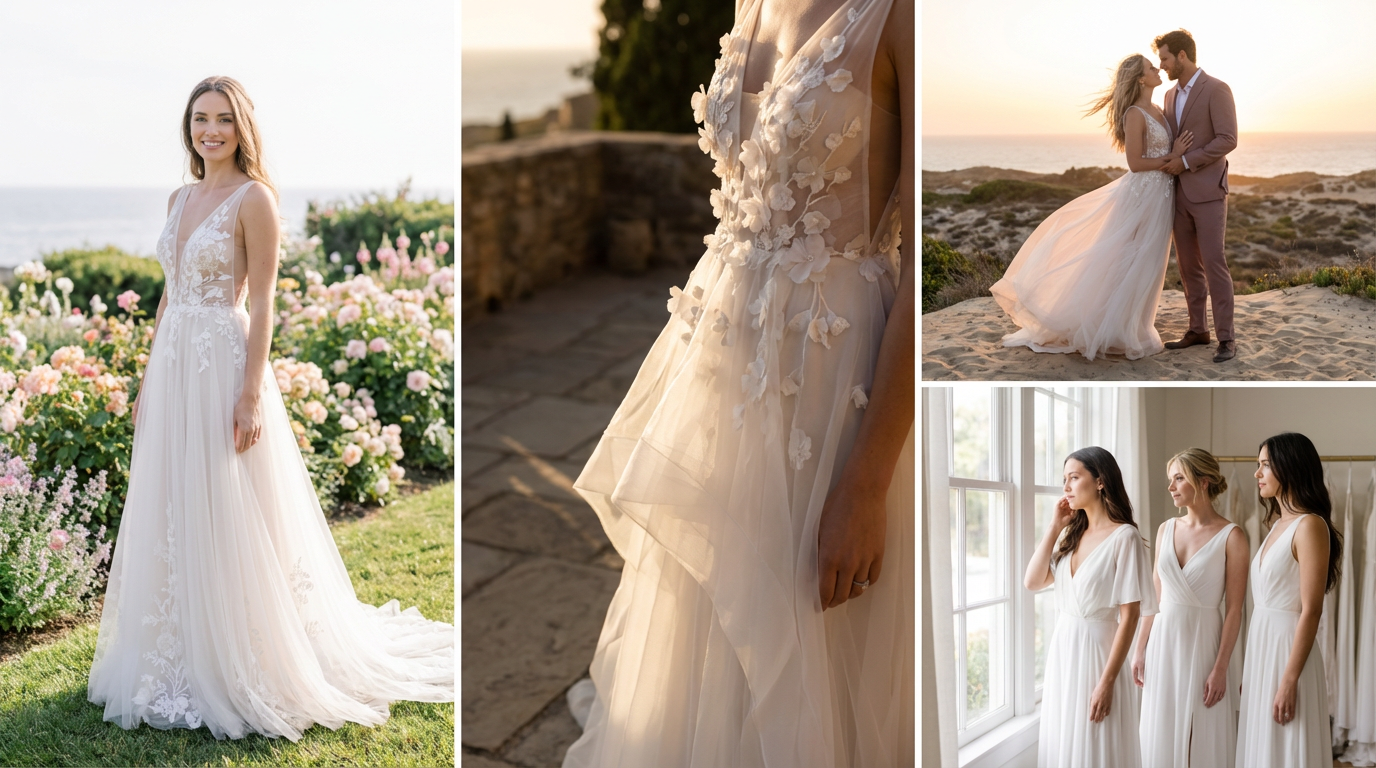
If lace is romance’s heritage, 3D florals are its modern reinvention. A 3D floral wedding dress introduces dimension that lace alone cannot achieve: petals that lift, edges that cast shadow, textures that catch light as the bride moves. These elements feel like couture because they behave like sculpture—romantic, but also decidedly designed.
The Craftsmanship Behind 3D Florals
Dimensional florals demand patient, meticulous work. Petals are layered, shaped, and fixed so they appear airy rather than heavy; multiple fabrics may be combined so the flower reads realistic, yet stylized. The most refined execution avoids bulk and visual noise, allowing the florals to feel integrated into the gown rather than applied afterward. This is couture floral detailing at its most persuasive: an illusion of softness built with technical discipline.
How 3D Flowers Transform the Silhouette
3D florals change how the eye reads the body. A floral cluster at the bodice can draw attention upward, framing the face and neckline; placed along the waist, it can emphasize shape with a softer edge than a seam. Even a skirt becomes more cinematic when petals create micro-movement—tiny shifts that make the silhouette feel alive. A gown like Blossom captures this effect beautifully, where floral dimension becomes part of the silhouette’s emotional narrative rather than an accessory to it.
Appliqués as a Couture-Level Finishing Touch
Appliqués sit at the intersection of texture and architecture. Wedding dress embellishment can be loud, but wedding dress appliqués—when done at couture level—are rarely about excess. They are about direction: guiding the gaze, creating depth, and building a tactile surface that feels curated rather than crowded.
The Artistry of Layered and Textured Appliqués
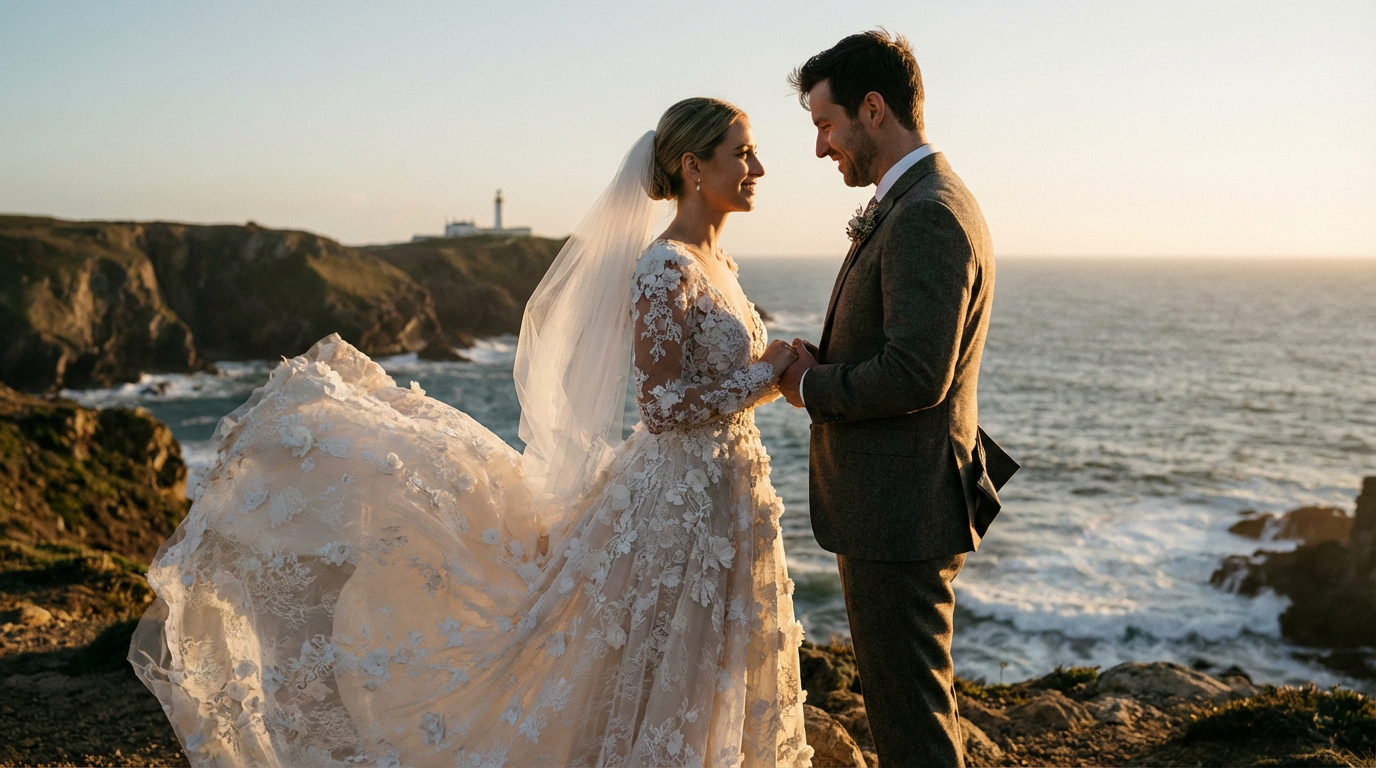
A textured wedding dress is often defined by how its surface behaves in light. Layered appliqués create dimension that photographs differently from every angle, revealing subtle relief and shadow the way fine embroidery does. The artistry lies in composition: appliqués can echo the line of the bodice, soften transitions between panels, or create a gradual “fade” across the skirt that feels painterly. In high fashion bridal, appliqués are not decoration; they are visual engineering.
How Appliqués Enhance Romantic Expression
Appliqués can shift a gown’s emotional tone. Floral placement can feel poetic and organic, while geometric placement can create a modern, editorial romance. A floral appliqué gown often reads as storytelling—nature interpreted through couture—because the motifs feel symbolic rather than literal. The most romantic results come when appliqués are used to express softness with intention, adding emotion without sweetness.
Choosing a Romantic Silhouette for the Bride
Selecting romance is less about fitting a trend and more about finding a texture language that matches the bride’s personality. Romantic design offers a spectrum—from barely-there softness to richly dimensional couture—and the right point on that spectrum should feel like an extension of the bride, not a costume she steps into for a day.
Matching Fabrics to the Bride’s Personality
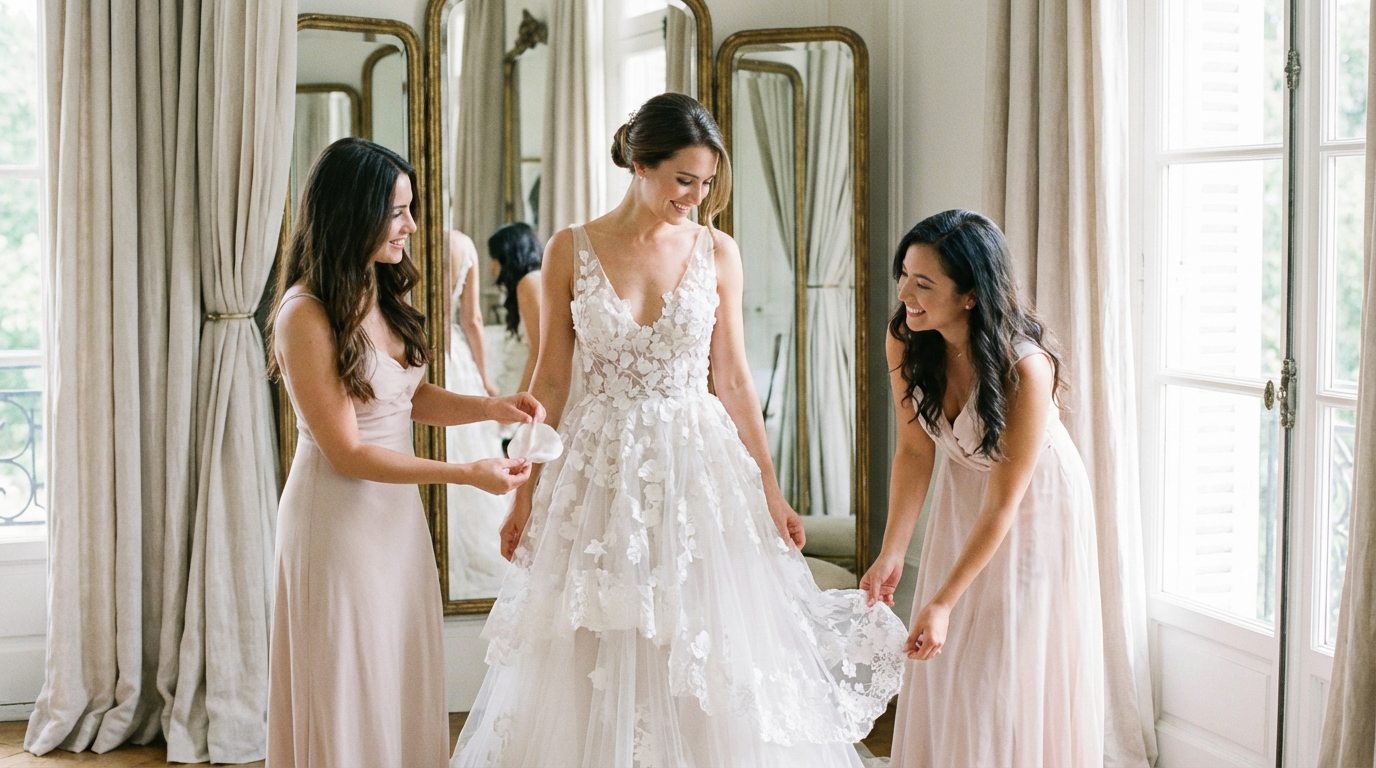
Airy tulles and chiffons suggest a dreamlike presence; lace introduces intimacy and heritage; dimensional florals signal artistry and bold softness. Brides who love understatement often gravitate toward subtle texture that reads refined up close, while more expressive brides may want florals or appliqués that are visibly sculptural. Exploring a romantic-focused edit such as The Bloom Edit Collection can clarify which romantic language feels most authentic—lace-led, floral-led, or a layered dialogue between both.
Understanding the Balance Between Volume and Softness
The most flattering romantic silhouettes understand proportion. Volume should feel lifted, not heavy; softness should feel intentional, not vague. The ideal balance depends on how the bride wants to move through her day—whether she wants airy expansion for ceremony drama or a gentler silhouette that still holds a couture finish. Romance is at its best when it looks effortless but is built precisely.
Conclusion
Romantic silhouettes remain bridal’s most enduring poetry because they translate emotion into texture. Lace offers intimacy and heritage, 3D florals introduce sculptural modernity, and appliqués create couture-level depth that makes a gown feel alive in light and movement. For brides drawn to softness with artistry, romance isn’t a theme—it’s a design philosophy, expressed through surface, silhouette, and the quiet luxury of craftsmanship. And when that romance is paired with the right context—an ocean-lit setting like Sunny Isles Beach, Florida and a boutique experience such as 3 Dots Bridal—the look becomes more than beautiful; it becomes unforgettable.