Wedding Trends from the Bridal Fashion Week Runway: What Inspires Designers
The Role of Bridal Fashion Week in Shaping Global Wedding Trends
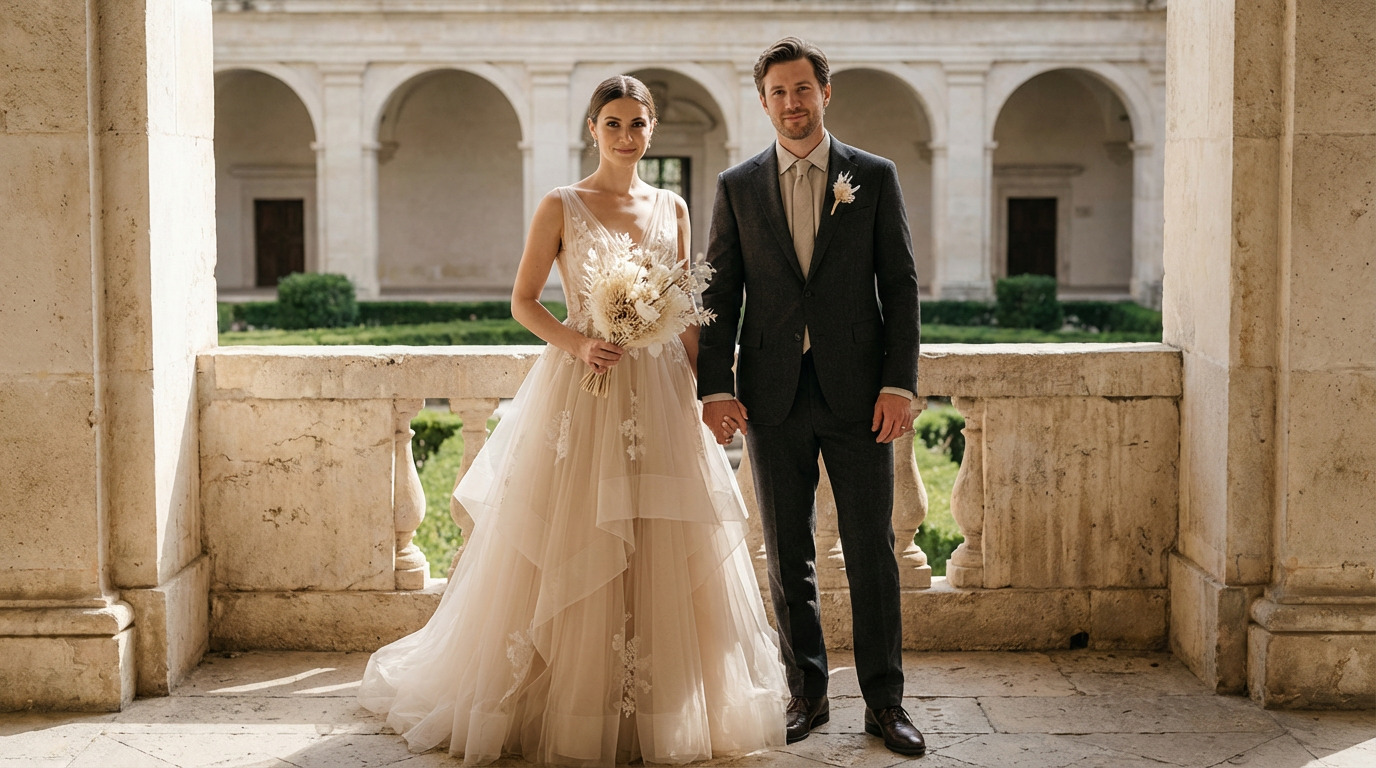
Bridal Fashion Week is less a showcase than a compass: the moment when the industry collectively decides what bridal will feel like next. These bridal fashion week trends ripple outward—first into editorial narratives, then into buyer selections, then into what brides begin to recognize as “current.” The runway does not simply predict taste; it defines the design vocabulary of the season, giving shape to silhouettes, surfaces, and styling codes that boutiques and ateliers translate for real clients.
Why the Runway Matters More Than Ever
The runway matters now because imagery travels faster than manufacturing. A look can become a global reference point within hours, turning wedding runway trends into instant visual literacy for brides. In a feed-driven era, runway bridal looks don’t remain abstract inspiration; they become expectation. That shift changes everything: designers create with the knowledge that one neckline, one texture, one engineered sleeve will be scrutinized in still photos, replayed in video, and saved into moodboards that guide appointments months later.
From Concept to Couture: How Trends Are Born
Runway is where designers are most intellectually honest. It’s the rare space where experimentation is permitted—where daring proportion, unusual textile behavior, and conceptual styling can exist before being refined into commercial clarity. This is the birthplace of bridal designer inspiration: a laboratory where an idea is tested in movement and light, then distilled into craft. What reads as spectacle is often research—proof that wedding dress innovations begin as questions, then become answers rendered in couture technique.

Key Wedding Trends Seen on the Runway
The season’s strongest directions are not “themes” so much as design philosophies. Some brands are pursuing purity through architectural minimalism; others are building romance through tactile dimension; many are letting fabric itself become the narrative engine. The most compelling modern bridal fashion is defined by intention—how a gown is built, not how loudly it announces itself.
Modern Minimalism with Architectural Precision
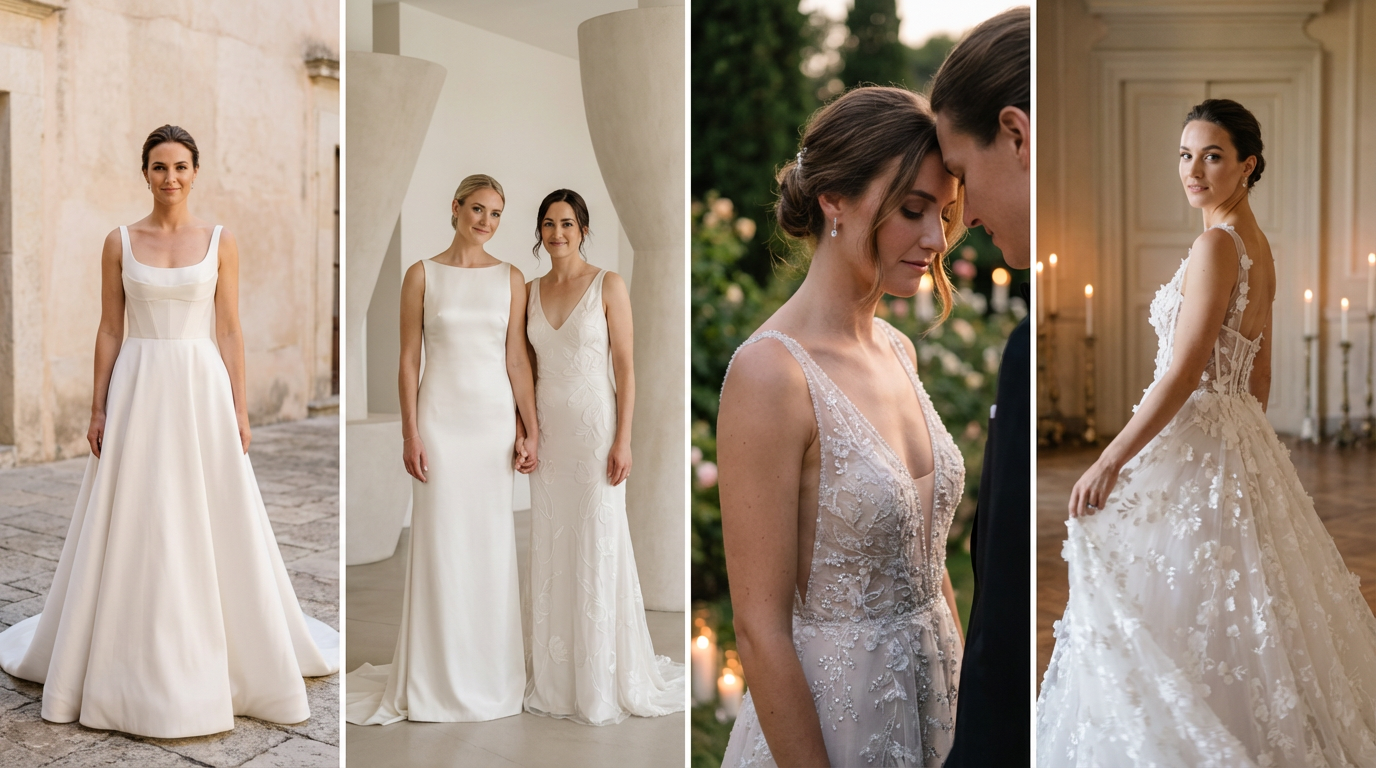
Minimalism has matured into a language of power. The new clean silhouettes aren’t blank; they are engineered—sharp necklines, controlled drape, seams that trace the body like quiet geometry. This is where couture bridal trends become most visible, because what appears simple on the surface is often complex beneath it. A collection like the Fall in Love collection captures this shift: elegance that feels edited, structured, and modern, proving that restraint can be the most commanding form of luxury.
Romantic Textures Through Lace and Dimensional Florals
Romance is returning, but with a contemporary spine. Lace is treated less as vintage softness and more as architectural surface—placed to create shadow, depth, and contour. Dimensional florals move beyond sweetness into artistry: appliqués feel sculptural, almost engineered, animating the silhouette as the bride walks. The result is romantic, but not naïve—an aesthetic that acknowledges bridal emotion while insisting on design intelligence.
Innovative Fabric Experiments
Material experimentation is one of the clearest runway signatures this year. Designers are exploring transparency that feels editorial rather than overt, pairing matte and sheen for optical depth, and using textiles that hold shape without heaviness. Fabric becomes the tool that makes a silhouette feel new—because when the material behaves differently, the entire gown gains a modern tension between softness and structure.

Color Stories Dominating the Bridal Runway
White is no longer the singular center of bridal identity. Runways are expanding the palette in a way that feels refined, not rebellious—suggesting that color, like cut, is now part of a bride’s self-definition.
Soft Neutrals and Modern Ivory Variations
Ivory, warm whites, champagne, and nuanced nude tones are increasingly treated as the modern luxury baseline. These shades soften the visual temperature of a gown, elevate minimal silhouettes with richness, and photograph with a costly, luminous restraint. In practice, they make design details—seams, pleats, structure—feel even more pronounced, because the color doesn’t compete with the cut.
Bolder Hues and Metallic Influences
Metallic influence is showing up as couture-level glow rather than literal shine: silvered undertones, pale gold warmth, and smoky tones that read like contemporary art under light. These shades sharpen the bridal mood into something fashion-led—confident, modern, and slightly provocative—while still maintaining the ceremonial gravitas that separates bridal from eveningwear.
The Inspirations Behind Designers’ New Collections
Runway direction is rarely random. Designers are in conversation with the wider world—art, architecture, nature, cultural memory—translating those references into bridal form and finish.
Nature and Organic Forms
Nature appears not as literal floral cliché, but as movement, rhythm, and line. Designers borrow from wind and water to create fluid drapes, from petals to build dimensional surfaces, and from natural geometry to guide proportion. Organic inspiration, at its most sophisticated, feels abstract—more atmosphere than illustration.
Architecture, Sculpture, and Structural Art
Architecture continues to shape the most modern silhouettes: negative space, balance, and the tension between curve and edge. Sculpture influences volume placement and the idea that a gown should read from every angle. This is the point where runway becomes intellectual—where design references are not decorative, but structural.
Cultural Narratives and Artistic Heritage
Cultural influence arrives through craft codes: textile language, pattern logic, symbolic detail, and references to artistic eras. The strongest work treats heritage with restraint—never costume, always nuance—allowing emotion to exist through texture and technique rather than obvious quotation.
How Runway Trends Influence Real Brides
Runway impact becomes real when it is edited into wearability. Brides don’t buy the most extreme version of a trend; they buy its essence—refined into comfort, movement, and personal resonance.
Translating High-Fashion Concepts into Wearable Designs
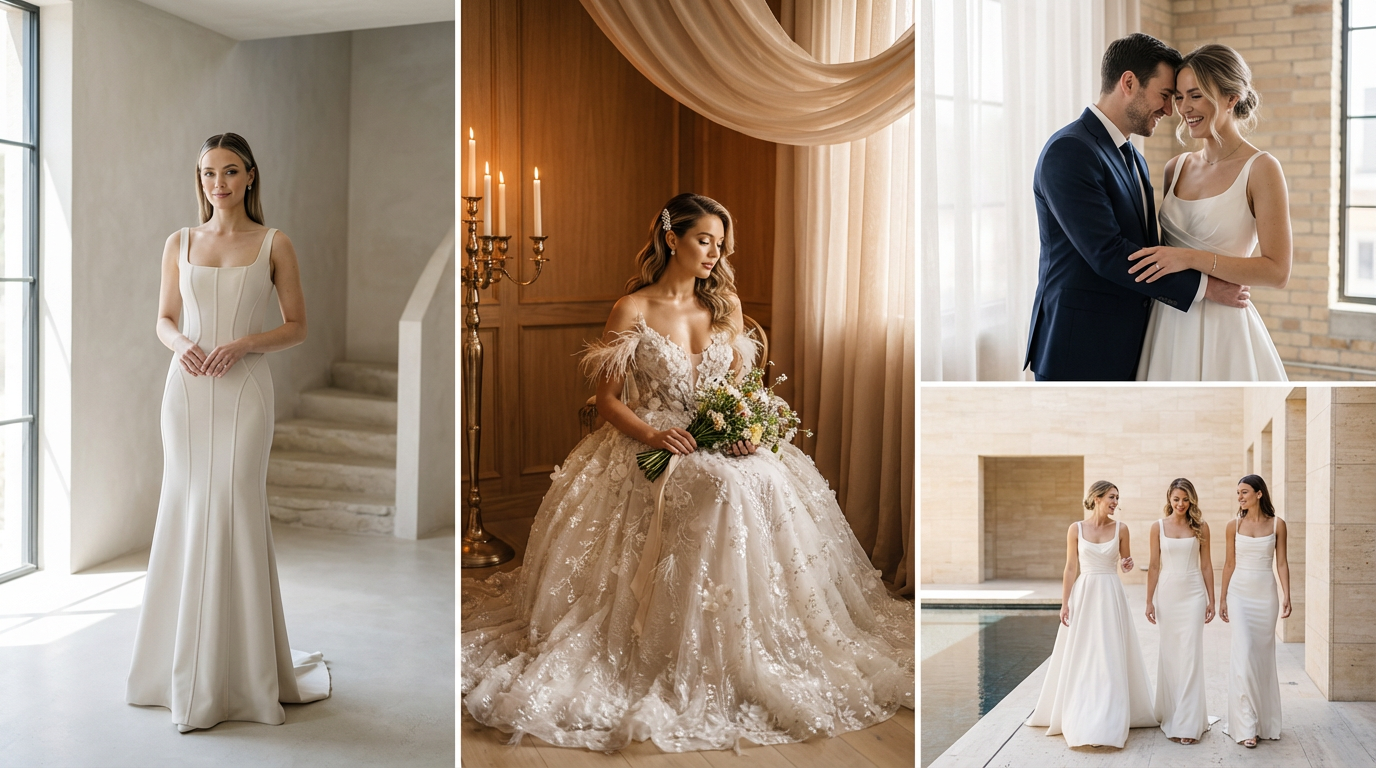
A dramatic runway concept typically becomes lighter, softer, and more precise once it enters production. Volume is calibrated, transparency is repositioned, and experimental finishes are refined into fabrics that perform across an entire wedding day. A gown like Adina reflects this translation: runway-level clarity in silhouette and construction, adapted into a wearable statement that still feels editorial.
The Role of Boutiques in Curating Runway Trends
Boutiques act as cultural editors. They select which runway ideas will resonate in real appointments, balancing fashion authority with what brides genuinely want to live in. That curation becomes tangible in places where bridal taste is shaped locally—such as Salt Lake City, Utah—and through stores like Perla Bridal, where runway direction is filtered into a coherent, wearable edit.

Conclusion
Bridal Fashion Week is not merely a parade of beautiful dresses—it is where bridal evolves as a design discipline. It forecasts aesthetics, tests technique, and reveals what the industry believes the modern bride is ready to embody. In that sense, bridal fashion week trends are less about imitation and more about acceleration: the runway pushes bridal forward, and the best of those ideas return as refined, wearable couture—shaping not only what brides wear, but how bridal itself is imagined.