How to Choose a Wedding Dress for the Modern Bride: Minimalism vs. Decoration
The Philosophy Behind the Modern Bride’s Choice
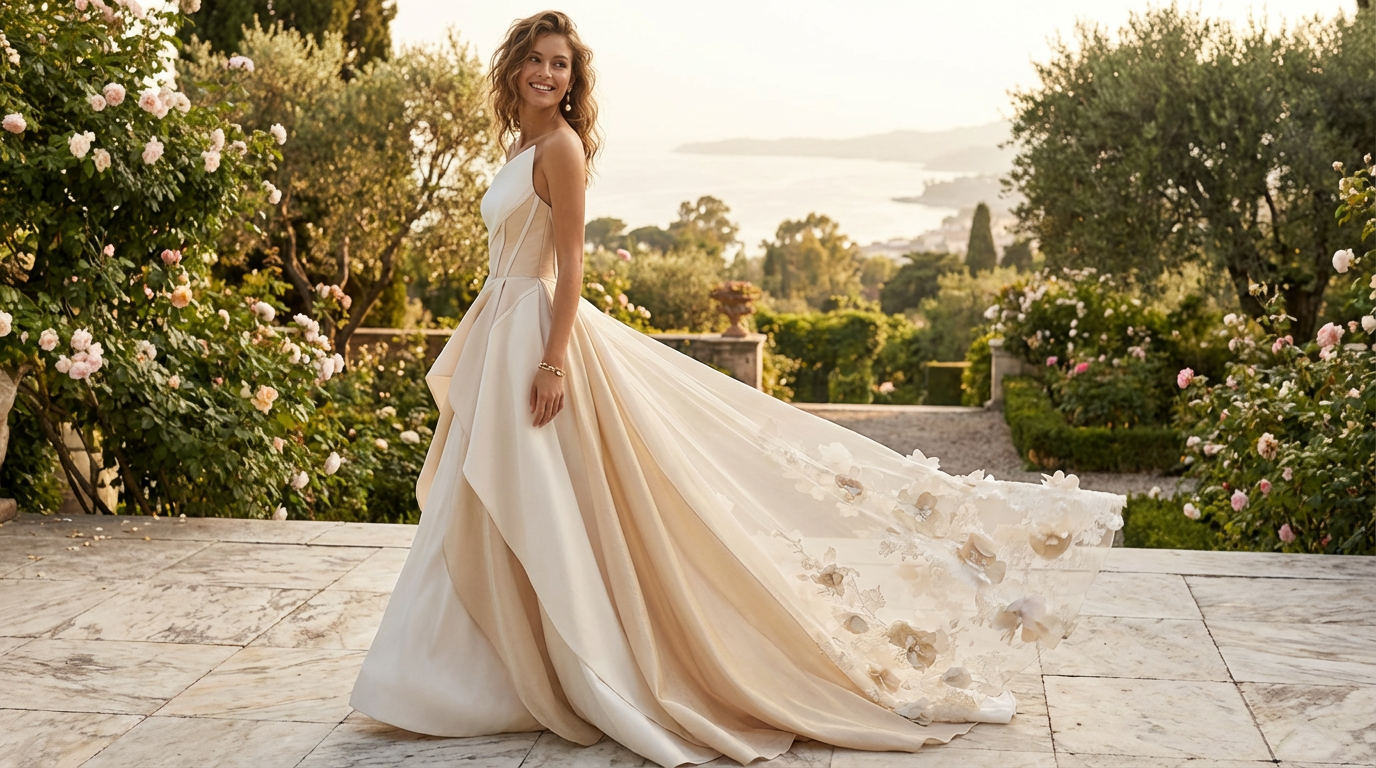
The 2025–2026 bride is making decisions through a fashion lens, not a rulebook. A modern wedding dress is no longer defined by “appropriate” details, but by intentional design: how the silhouette holds, how the fabric photographs, how the look expresses a personal aesthetic rather than inherited expectations. What used to be a binary—classic versus trendy—has evolved into a more nuanced question of identity. Minimalism and decoration are not opposing teams; they are two languages of the same modern bridal desire: to look unmistakably herself, and to feel impeccably styled.
The Rise of Personal Style in Bridal Fashion
Personal style has become the new bridal standard because brides are surrounded by visual references that educate the eye. Runway-driven bridal, editorial shoots, and high-resolution social content have made women more specific about what they want: the exact line of a neckline, the mood of a texture, the difference between “sparkle” and couture embellishment. The result is that “simple vs decorated wedding dress” isn’t a superficial dilemma—it’s a decision about what kind of presence you want to have in your own story, and how you want that presence to read in motion, in portraits, and in memory.
Emotional vs. Practical Factors
Most brides think they choose with logic, but the first reaction is nearly always emotional. Minimalism often triggers a sense of calm, control, and clarity—especially for brides who want the dress to feel like a refined extension of themselves. Decoration can trigger a different emotional response: romance, celebration, the desire for impact and theatricality. The practical layer follows: venue, climate, comfort, and timeline. The smartest bridal consulting approach is to respect the emotion, then pressure-test it with real-life factors—because the right dress is the one that feels authentic and performs beautifully.
Minimalism — The Art of Pure Form and Clean Lines
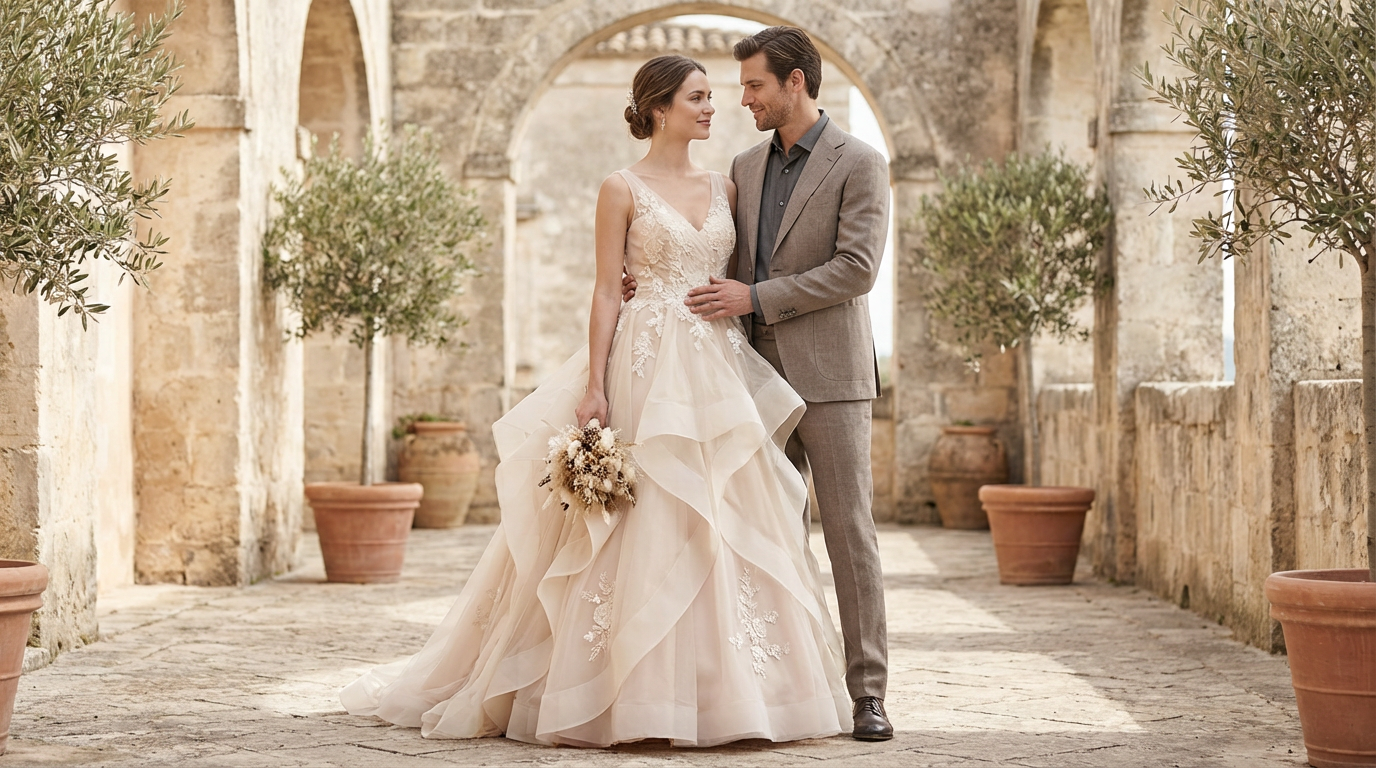
Minimalism is not “less.” It is a stricter standard. A minimalist wedding gown exposes every decision: seam placement, fabric quality, proportion, and fit. Without surface distraction, the dress must be architecturally correct and technically clean. That is why minimalism has become one of the most prized expressions of clean-line bridal fashion—it reads modern, expensive, and quietly commanding when executed with precision.
Key Elements of Minimalist Bridal Style
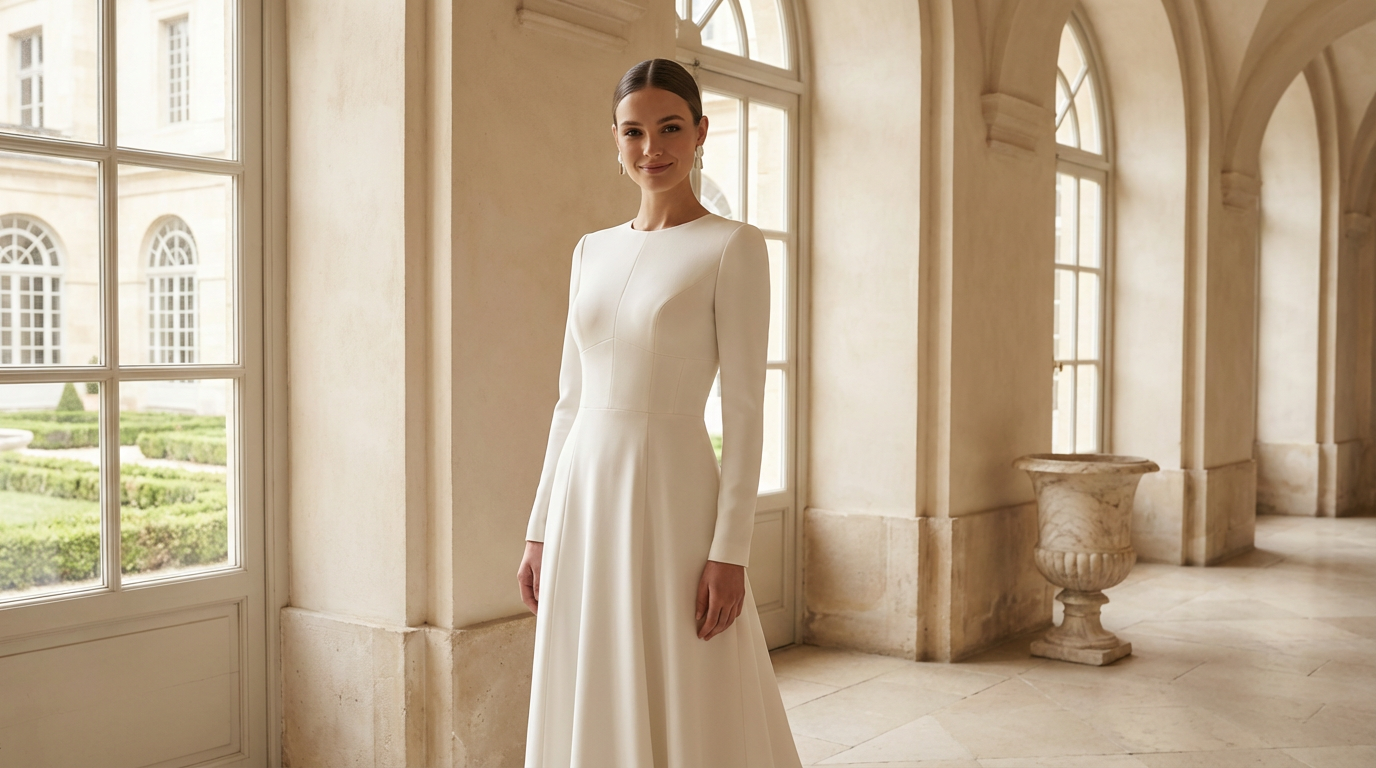
The minimalist look is built on disciplined patternmaking and textile intelligence. Think structured crepe that creates a controlled vertical fall, mikado that holds sculptural volume without heaviness, or double satin that reflects light in a polished, editorial way. Darts and panel lines are not hidden; they become part of the visual architecture. In consulting terms, minimalism succeeds when the dress has an intentional “shape logic”: the neckline relates to the waistline, the skirt balance supports the body, and the finish looks immaculate under close photography.
Who Minimalism Suits Best
Minimalism suits brides who feel powerful in restraint—women who don’t need the dress to “announce” them because their presence does that already. From a silhouette selection standpoint, clean construction can flatter many body types precisely because it highlights proportion: a defined waistline creates structure, a column elongates, a controlled A-line softens while staying modern. The key is confidence in simplicity and willingness to prioritize fit. Minimalism is unforgiving when it’s slightly off; when it’s perfect, it looks effortless.
Modern Interpretation by Designers
The modern minimalist bride isn’t searching for a blank dress—she’s searching for refined design. Today’s minimalism often includes subtle fashion codes: sculpted bodices, softened drape that looks intentional, or a modern neckline that feels almost architectural. If you want to see how a brand frames that edited, contemporary mood, the First Look collection is a useful reference point for clean silhouettes that still feel styled rather than plain.
Decoration — The Power of Embellishment and Couture Details
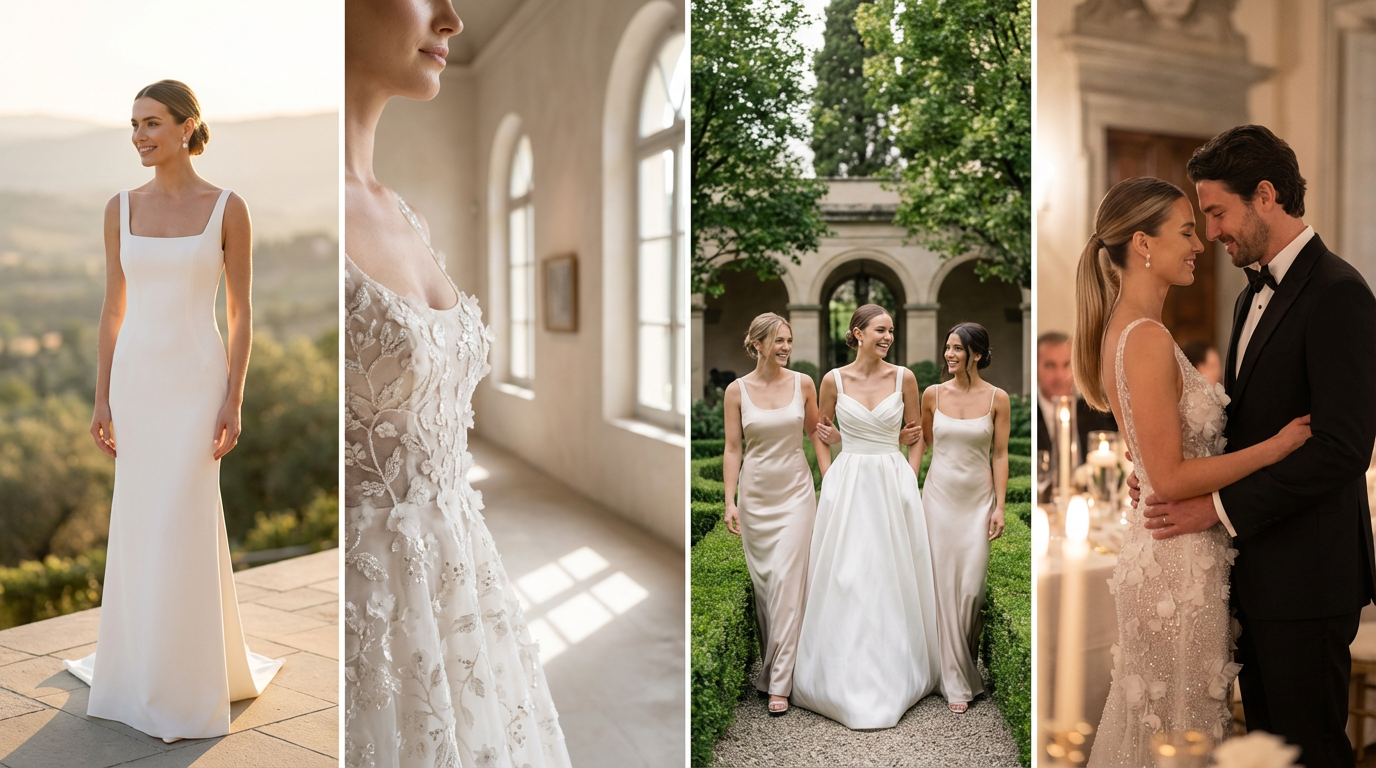
Decoration is not “more,” either. At its best, it’s couture storytelling. A decorated bridal dress shifts the emphasis from pure form to surface artistry—texture, sparkle, and detail that creates mood. The difference between elevated and overwhelming is always technique: how embellishment is integrated into the dress, how it supports the silhouette, and whether it looks intentional in both daylight and evening lighting.
Couture Embellishment Techniques
True couture decoration is never random. Crystals are placed to contour the body rather than simply shine; embroidery is mapped like illustration; 3D florals are built to create shadow and relief; feathers and sequins must be balanced so they move beautifully without looking costume. This is where fabric detailing becomes the expert filter: the base textile must support the embellishment, and the embellishment must respect the garment’s structure. An embellished wedding dress should feel engineered, not applied.
Silhouettes That Highlight Decoration
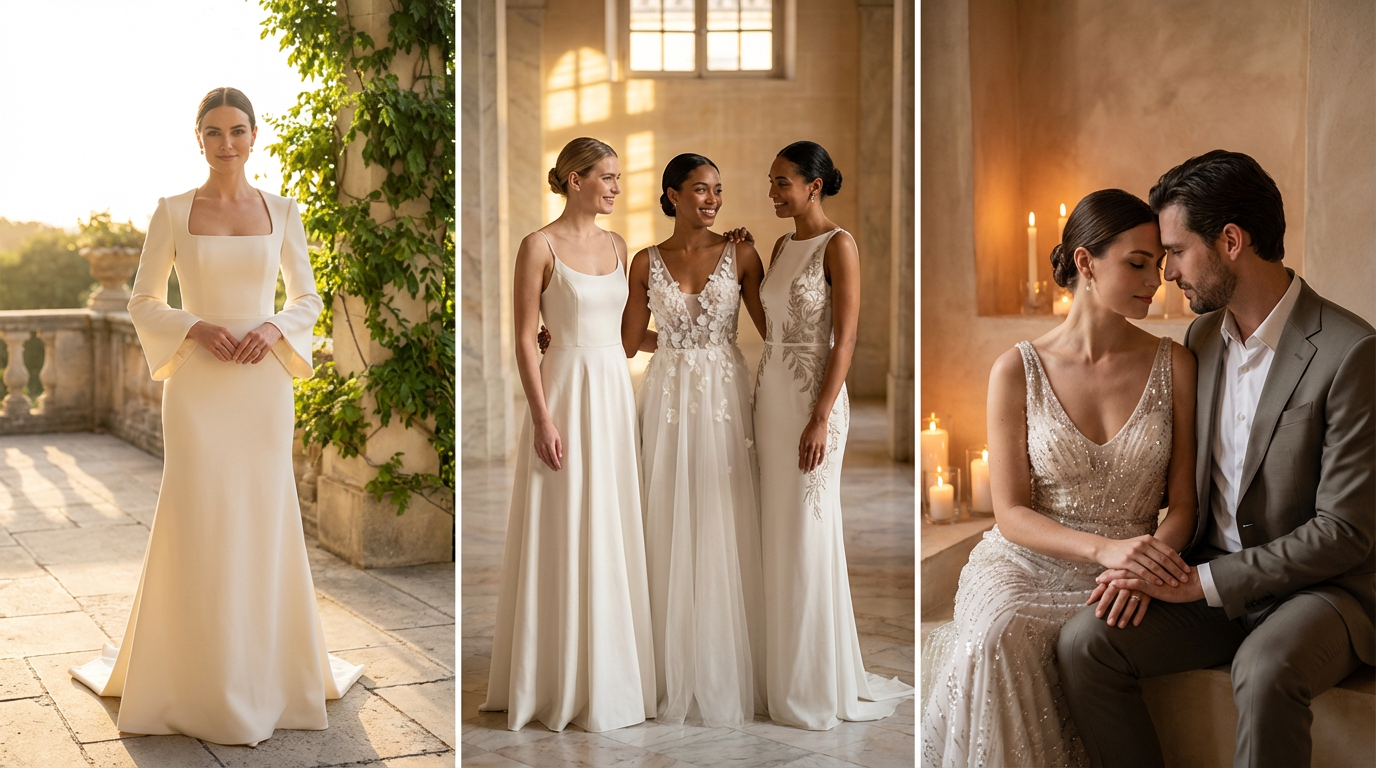
Silhouette is the frame that makes decoration look expensive. Ball gowns give embellishment a grand canvas; mermaid shapes create high-impact contour; dramatic A-lines allow detail to fade and build across the skirt like a couture gradient. Consulting-wise, the goal is harmony: heavy decoration needs structural support, while delicate, scattered embellishment can work on lighter silhouettes that still maintain line discipline.
Emotional Impact of Decorated Dresses
Decoration creates an immediate “event” feeling. It photographs with heightened texture, catches candlelight, and often delivers the wow-effect brides imagine when they picture themselves entering a room. The key is to choose impact that matches your personality rather than borrowing someone else’s fantasy. A dress like Altan can be read as a reference for how detail and silhouette can feel editorial—where the embellishment is part of the design story, not a distraction from it.
How to Understand What Fits Your Personality
The most reliable way to decide between minimalism and decoration is to treat the dress like a portrait of your modern bridal identity. Ask not “what is trending,” but “what reads like me when everything else is quiet.”
Minimalist Bride Personality Traits
Minimalist brides tend to value clarity, architecture, and composure. They feel most themselves when the dress is about line, fit, and proportion rather than surface statement. They often prefer styling that looks intentional but restrained: modern hair, refined accessories, a silhouette that doesn’t compete with the bride’s face or posture.
Decor-Lover Personality Traits
Decor-driven brides are often emotionally expressive and visually oriented. They love texture, romance, and the sense of occasion that embellishment brings. They enjoy the dress as an art piece and typically want a look that feels cinematic—especially under reception lighting, where detail becomes alive.
Practical Selection Guide — Minimalism vs Decoration
Practicality doesn’t mean “boring”; it means making sure your aesthetic choice performs in your real environment. The correct choice is the one that looks stunning and feels wearable across the whole day.
Body Shape Considerations
Minimalism elongates and refines when the fit is precise; decoration can add dimension and strategically shift focus. If you want to lengthen the frame, clean vertical lines in crepe help. If you want to emphasize curves, contour-led decoration can highlight the waist and bodice. Either way, comfort and support are non-negotiable: the best-looking dress is the one that holds its line without constant adjustment.
Venue & Wedding Style Alignment
Venue is your styling partner. Minimalism is exceptionally strong for city weddings, modern architecture, and intimate ceremonies where clean lines look editorial against structured environments. Decoration thrives in grand interiors, candlelit spaces, and venues that can “hold” visual richness. Even shopping location can help you visualize the edit; exploring a market like Monterrey, Mexico can show how boutiques curate minimal and embellished options differently depending on regional taste and venue culture.
Comfort and Movement
Minimalist dresses often feel lighter and more mobile, but they require exact fit to avoid shifting. Decorated gowns can be heavier and may need a thoughtful plan—supportive under-structure, bustle strategy, and realistic movement testing. In consulting, this is where we assess not only the look but the choreography: sitting, walking, dancing, hugging, and being photographed from every angle.

Conclusion
Choosing between minimalism and decoration is ultimately choosing how you want your bridal presence to speak. A minimalist wedding gown communicates precision and calm authority; an embellished wedding dress communicates celebration through couture texture and light. The most modern answer is not to follow a rule, but to commit to the version of yourself you want to remember—then select the construction, silhouette, and fabric detailing that makes that identity feel effortless. For a curated, appointment-based approach to this decision, a boutique such as Viero Bridal Michigan reflects how professional guidance turns aesthetic preference into a look that performs beautifully in real life.